MANILA, Philippines?Making one?s way around the public cemetery in Mandaluyong City means having to step on a gravestone or two. In the 2.57-hectare cemetery, where every possible space has been filled, even the pathways are lined with graves, many of them belonging to children.
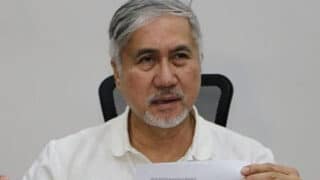
?It?s just not right,? Mandaluyong Mayor Benhur Abalos told Inquirer. ?We should give more dignity to the dead.?
Thus, the city of Mandaluyong is pushing for a more respectful way of honoring the departed through the newly inaugurated City Columbarium, Crematorium and Chapel inside the public cemetery in Barangay Vergara now named ?Garden of Life.?
Officials said the first public columbarium in Metro Manila could be the cheaper and space-saving solution to the woes long associated with overcrowded burial grounds.
The columbarium, which opened on Saturday, was designed to house more than 1,000 niches for city residents, who may avail themselves of its services at a fraction of the cost listed in private memorial homes.
A crematorium is a facility where the remains of the dead are burned, while a columbarium is a place where urns containing the ashes or cremated remains are stored for public visitations.
Abalos said the project not only provides residents with a more dignified way of paying their respects to the dead, but also erases negative thoughts associated with dark, scary and overcrowded cemeteries.
Not pricey
Jimmy Isidro, the city?s public information chief, said most columbarium and crematorium facilities are private and expensive, and, therefore, are accessible only to rich families.
?But the Mandaluyong columbarium will be open to all,? he said.
Isidro said cremation is a much cheaper alternative to private memorial gardens, and less troublesome than finding space in crowded public cemeteries.
In fact, the service fees in the Mandaluyong columbarium and crematorium are more advantageous to indigent families than rich households.
At the Mandaluyong facility, poor families can avail of cremation services for their departed loved ones for as low as P8,000 (fresh) and P4,000 (bones). Regular rates of P20,000 (fresh) and P8,000 (bones) shall apply to higher-income families.
For the use of the columbarium, poor residents only need to pay P1,250 every year, while those who can afford the rates will be asked to pay P25,000 for a 25-year term, officials said.
The columbarium?basically resembling a locker cabinet stretching several feet wide and one-story high?is housed in a three-story facility adjacent to the crematorium. More floors may be added to the building when the columbarium is full, according to Abalos.
Common area
The urns, which the families have to buy themselves, will be deposited in the small square lockers with a marble finish, on which the names of the dead will be inscribed. Each locker can accommodate four urns.
?In order to maintain the neat surroundings, people are advised to bring their candles and flowers to a common area next to the columbarium,? Isidro said.
He also advised people who would otherwise visit the columbarium on All Saints? Day and All Souls? Day to instead take their urns with them to their homes so they could remember their dead away from the chaos in the public cemetery.
?This way, they can be together with their loved ones in the privacy of their own homes, then return the urn later,? he said. ?
Because of the growing numbers of people interred in the Mandaluyong cemetery every year, the city government estimated that at least 1,000 niches need to be available annually to accommodate the need.
In response, the city government built a Bone Crypt for families who may be against cremation but whose 5-year contracts in the cemetery have lapsed.
The bones are taken to the crypt and their names inscribed on a wall for families paying them a visit.
Abalos said he expects conservative folks to show resistance to the idea of cremating their loved ones and keeping their ashes in a columbarium, but hopes that with time, they will also see its wisdom and practicality.