





Banking on ‘momentum,’ House panel OKs FOI bill


[Updated March 16, 2026, 7:17 p.m.]
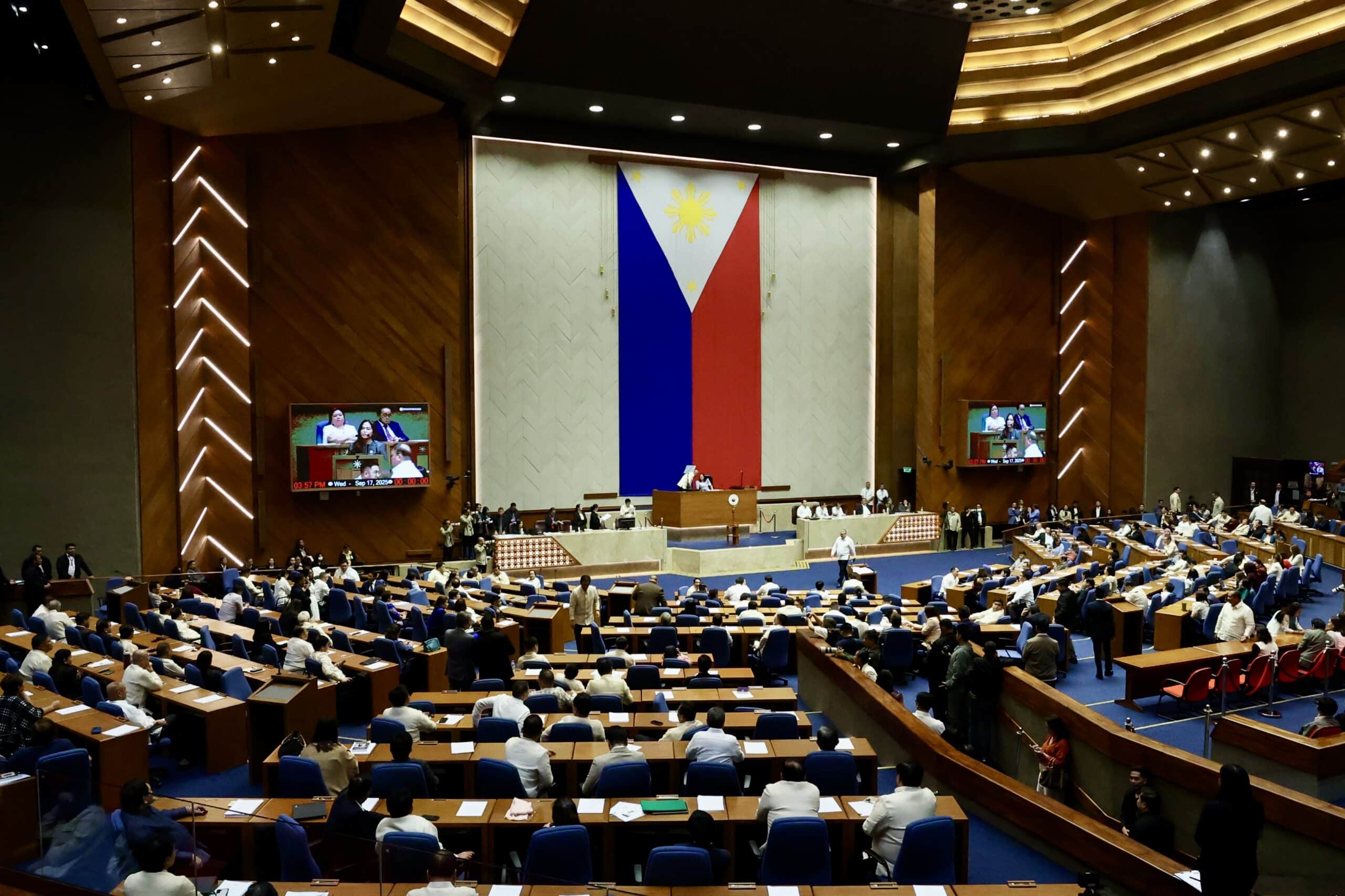
MANILA, Philippines — The House committee on public information on Monday approved the Right to Information Act or the Freedom of Information (FOI) bill, mandating public access to all official records with certain exceptions.
“For more than three decades, this measure has lingered in the legislative backburner,” Cagayan de Oro 1st District Rep. Lordan Suan said in his opening speech. “But the momentum of the 20th Congress has brought us its passage within our reach.”
“This afternoon, we stand one step closer to fulfilling our commitment to the Filipino people,a government that is transparent, responsive, and worthy of their trust,” Suan continued. “Let us take that step together by approving this bill.”
READ: FOI bill hurdles House committee level
After the committee’s deliberations, Akbayan Rep. Perci Cendaña moved for the approval of the still-unnumbered substitute bill.
No one objected to this motion, prompting Suan to approve the bill subject to style and recommendations of the committee on appropriations.
The approval was met with applause from lawmakers and other officials.
Disagreements
However, before this, disagreements emerged over a provision on this bill.
Atty. Joseph Calulut, spokesperson of the Philippine Drug Enforcement Agency, urged lawmakers to delete Section 32, Paragraph B of the bill, which he said “is an exemption to the exemptions.”
READ: FOI, antitrust bills top House agenda
Section 32, Paragraph B states that: “This exception shall not be invoked to deny access to information, records, or documents requested by government agencies or instrumentalities with a specific constitutional or statutory mandate to conduct investigation, such as Commission on Human Rights (CHR), the Commission on Audit (COA), Office of the Ombudsman, and other similar oversight bodies.”
Calulut explained that the part of the provision is an “indirect amendment” also of some laws like Section 270 of the National Internal Revenue Code (NIRC), which mandates strict confidentiality of taxpayer information by the Bureau of Internal Revenue.
However, Yamsuan, who presided over the technical working group (TWG) of this bill, said that the certain provision was added upon the request of CHR and COA during the TWG.
Suan then moved to remove the phrase “and other similar oversight bodies” to Section 32 Paragraph B. This move meant that, under the proposal, only COA, CHR, and Ombudsman would be protected by the exemption.
‘Solomonic proposal’
Cendaña expressed his reservations on this move, saying the removal of the phrase “and other similar oversight bodies” would mean the proposed Independent Commission Against Infrastructure Corruption (ICAIC) would not be covered by the provision.
Last year, the bill proposing the creation of the ICAIC was approved by the House Committee on Government Reorganization.
ICAIC seeks to strengthen the body to investigate infrastructure anomalies to have powers to issue subpoenas, seek preventive suspensions and hold departure orders.
“Having said that, if this will expedite the process, I am willing to agree with the Solomonic proposal of the chairperson,” Cendaña said.
It was after this exchange when Cendaña moved for the approval of the bill.
The FOI bill is among the bills tagged by President Ferdinand Marcos Jr. as urgent in the Legislative-Executive Development Advisory Council for the 20th Congress. /mr


