MANILA, Philippines?Starting July 19, the shelf life of cellular phone credits will be ?tripled,? with the prepaid load of P10 or less extended to three days and the load of more than P300 stretched to four months, the National Telecommunications Commission (NTC) announced Tuesday.
On the prodding of the Senate, the NTC also announced that effective July 23 unsolicited ?text spam? or promotional text messages would be prohibited.
The NTC action came in the wake of the uproar over ?disappearing loads? caused by Senate President Juan Ponce Enrile?s complaint of ?vanishing load? in his prepaid account.
Consumer rights advocates have long criticized this practice of telecommunication companies (telcos).
The commission earlier justified its years of inaction, saying that a temporary restraining order (TRO) issued by a Quezon City judge had blocked an NTC memo that set the guidelines on billing statements, sale and use of prepaid cards, and interconnection agreements.
Investigate judge
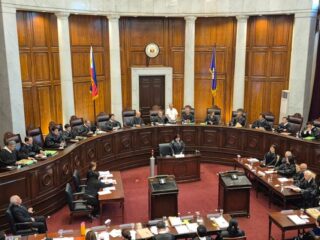
At the resumption Tuesday of the Senate hearing, Enrile, who initiated the probe of the disappearing loads, said he would ask the Supreme Court to investigate the Quezon City judge who issued the TRO eight years ago.
?The Senate president will write the Chief Justice and ask through him to discipline this judge and learn why the case has not moved for eight years,? Enrile said.
?We will also write the Judicial and Bar Council that the Senate will object to the promotion of that judge,? the Senate President said.
The office of Sen. Mar Roxas identified the judge as Vivencio S. Baclig, presiding judge of Branch 77 of the Quezon City Regional Trial Court.
At the hearing, NTC Commissioner Ruel V. Canobas said telcos had already agreed to the NTC decision to extend the shelf life of cell phone loads.
Concrete results
The shelf life of credits of P10 to P50 will be extended from two to five days to 15 days. More than P50 to P100, 30 days; more than P100 to P250, 60 days; and more than P250 to P300, 75 days.
Roxas, who presided over the hearings on disappearing cell phone loads, said the hearings had brought concrete results.
?With this, our money will no longer disappear as if they just evaporated or expired. This is a good output of the hearings,? he said.
?Excessive profits?
Roxas said the Senate would not allow that the money of consumers would just disappear and that telcos would earn excessive profits. ?Profits are OK but they should not be excessive,? he said.
Globe Telecom posted a consolidated net income of P11.3 billion in 2008, while PLDT?s consolidated wireless service revenue amounted to P93.6 billion.
There are some 75 million mobile phone subscribers in the Philippines.
End of text spam
On ?text spam,? Canobas said subscribers would no longer be bombarded with messages unless they subscribe to these promos first.
?So starting July 23, we?ll see an end to these ?promo-promos? that we did not ask for but keep on coming even if we had not subscribed to them,? Roxas said.
?All promos will first need our subscription. It will no longer be that they will keep sending us these messages without us knowing what is happening,? the senator said.
However, Canobas said that those who were already ?subscribed? should honor their subscription until it ends.
Drop calls
Canobas also said that the NTC technical working group was coordinating with the telcos on how to charge subscribers at least ?three seconds per pulse? for their calls.
Currently, telcos charge subscribers ?per minute? even for drop calls or calls that lasted 10 seconds or less than a minute, Roxas said.
Rodolfo Salalima, Globe Telecom chief legal adviser, and Ramon Isberto, Smart Communications public affairs chief, raised the possibility that a ?flag down? rate be imposed for each call.
Roxas said the NTC should study this carefully especially after Salalima noted that subscribers in other countries that have a ?flag down rate? actually pay ?two to three times? more than what Filipinos were paying.
Selling numbers
Enrile said the telcos should investigate their marketing officers for allegedly selling the cell phone numbers of subscribers to the telcos? ?content providers,? or the firms responsible for cell phone promos.
Isberto said this was prohibited, but Enrile said it was happening.
?This is corruption going on in your organization, so please tell us. [My sources] are also shocked by operations of some of your marketing people and they have become immensely affluent because of this,? Enrile said. With a report from Inquirer Research