





Smaller classrooms, more learning, says Edcom 2


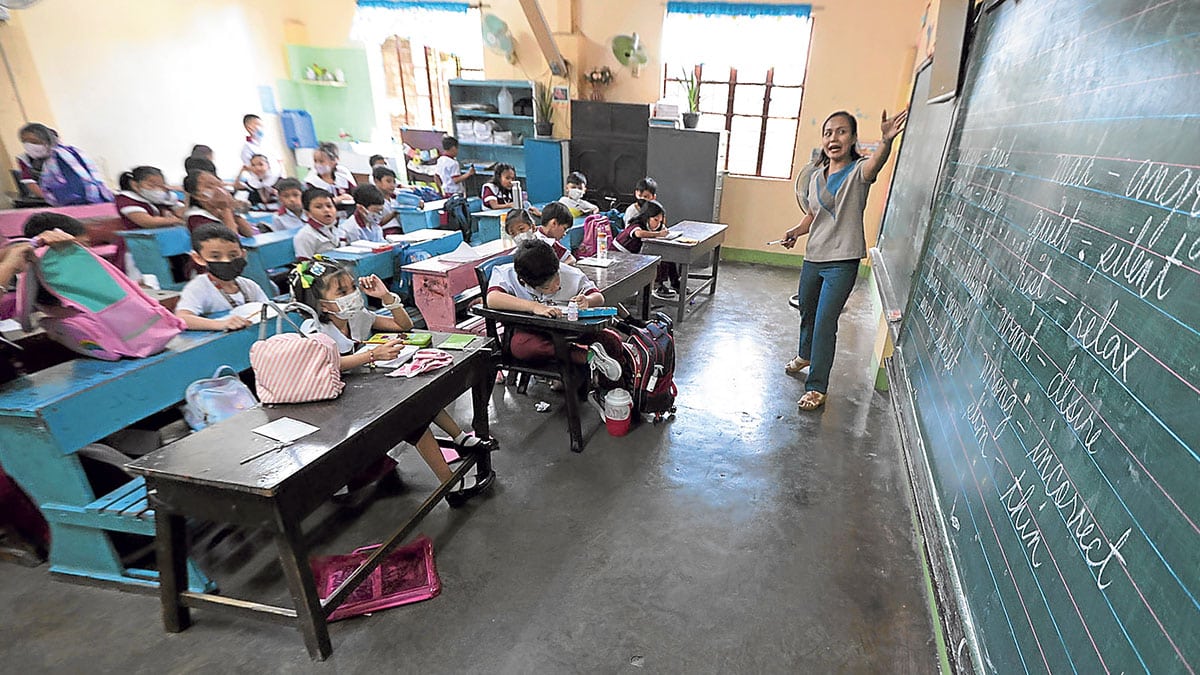
MANILA, Philippines — Overcrowded classrooms and bullying drive absenteeism and lower engagement, while smaller class sizes are linked to better participation and safer learning environments, the Second Congressional Commission on Education (Edcom 2) said on Sunday, citing its findings from a discussion with students.
Edcom 2 members talked to junior high school students from President Corazon C. Aquino High School in Baseco, Port Area, Manila, on May 28 to assess the Academic Recovery and Accessible Learning (Aral) Summer Program and collect direct feedback.
Initiated by the Department of Education, the program conducted from May 6 to June 2, provides small-group tutorials focused on reading, mathematics, and science for struggling public school learners.
READ: School overcrowding, bullying fuel absenteeism – Edcom 2 findings
During a focus group discussion, students from Grades 8 to 10 raised concerns about persistent bullying and classroom disruption during the regular school year, with classes of up to 60 students.
Safer environment
They said that, in contrast, Aral’s smaller classes of about 10 learners create a safer, more supportive environment, letting them participate more openly and concentrate better.
They described regular classes as chaotic, noisy, and disruptive, saying some classmates engage in bullying behaviors such as physical aggression and theft of belongings.
They also shared that they are sometimes teased about their gender and subjected to severe ridicule from peers when they make mistakes while reading aloud. “We come to school to learn, not to be embarrassed,” one said.
READ: Tinio: K-12 a failure as 87% of Grade 11 students struggle with reading
According to the students, bullying sometimes escalates into coordinated attacks, leading to fear, absenteeism, and avoidance of school. “I have experienced being ganged up on inside the classroom. I was punched,” one of them said.
“I was absent for three days… because they were waiting to ambush me,” another one added.
“There is really no safety here at school, and it is even worse once you go outside,” a student said.
Some are also experiencing cyberbullying, with stolen videos and photos of them taken in restrooms being posted on social media.
Fear of retaliation
Many, however, were hesitant to report the incidents, citing ineffective interventions and fear of retaliation.
“Even when the teacher reprimands them, it doesn’t work — the classmate doesn’t change and even gets angrier. And the situation just gets worse and more chaotic,” a student said.
Beyond issues on classroom dynamics, some students raised concerns about poor learning conditions in overcrowded, poorly ventilated classrooms.
School overcapacity has also forced very early class schedules, sometimes as early as 5:30 a.m., further adding to their strain.
“The experience of the students in Baseco, Tondo, teaches us that our students are struggling not simply due to academic challenges, but because of various factors, including bullying,” said Edcom 2 Executive Director Karol Mark Yee.
“This tells us that as we continue refining the Aral Program, we must bear in mind not only instilling academic rigor but also supporting our students so they feel safe, psychologically and physically, in school,” Yee added. /cb/atm


