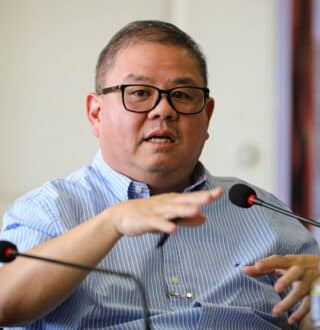
MANILA, Philippines?How do ?jueteng lords? use auction houses like Christie?s in Singapore to launder money abroad?
Knowing the limits on carrying foreign currency outside the country, jueteng operators have resorted to buying works by young Filipino artists known to international collectors, said lawyer Fernando Topacio.
The paintings are removed from their frames, rolled inside tubes and hand-carried on planes, he said.
?For example, a painting by a known Filipino artist can have an estimated value of more or less P1 million. A jueteng lord or his trusted aide who carries 10 tubes in one hand can be carrying more or less P10 million,? Topacio said.
All one needs is to submit a certificate that the paintings are registered for auction with Christie?s and the person carrying these paintings can breeze through the customs zone.
Topacio said launderers preferred the works of younger artists ?because there are restrictions in taking the works of older masters out of the country. You can?t just bring out an Amorsolo or a Juan Luna.?
Topacio, himself an avid art collector, said among the commonly purchased local art pieces were the works of Ronald Ventura, Mark Justiniani and Elmer Borlongan.
?Once the works are auctioned, Christie?s would only ask the sellers where the proceeds of the sale would be deposited then the money trickles back from there to our local banks here,? he said.
Topacio said Christie?s was beyond reproach. ?Who would question the money deposited from the proceeds of an international auction house??
The lawyer said this practice partly explained the phenomenon of the steady rise in the price of artworks by younger Filipino artists in the international art scene. With a report from Marlon Ramos