MANILA, Philippines -- An Egyptian diplomat on Tuesday called for an end to religious intolerance and violence through constructive dialogue, in order to promote understanding among countries and cultures that could help end historical rivalries.
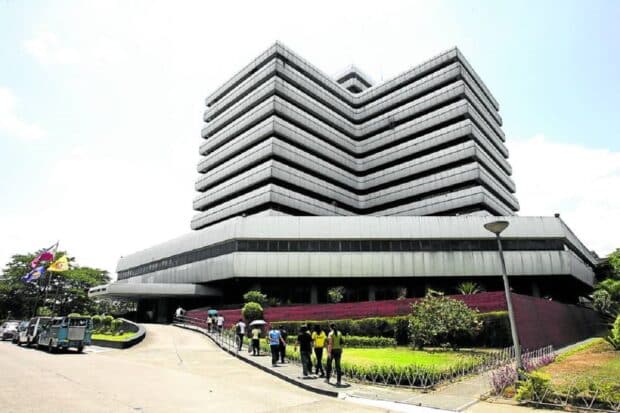
?It is essential to curb the tides of religious extremism, intolerance and violence that threaten to erode our development gains and destabilize national peace and social harmony,? said Ambassador Maged Abdelaziz, permanent representative of Egypt to the United Nations in New York, at the opening of the Special Non-Alligned Movement Ministerial Meeting on Interfaith Dialogue and Cooperation for Peace and Development (SNAMMM) at the Philippine International Convention Center.
?Sowing the seeds of the culture of peace among peoples and nations through dialogue is instrumental to cement the global efforts towards total elimination of the shadow of war and the perils posed by the continued proliferation and stockpiling of weapons of mass destruction," he said.
Abdelazis said that cooperation for peace and development has been one of the fundamental principles of the NAM in facing the growing challenges brought about by globalization.
He said that solidarity among developing countries was necessary to preserve their interests and realize the aspirations of their peoples for progress.
Despite the serious steps taken by many countries to implement their international commitments to combat racial discrimination, xenophobia and related intolerance, bigotry and racism still persist, according to Abdelazis.
He said that eliminating these negative phenomena would only be possible by consolidating efforts to reinforce the principles of democracy and respect of human rights, and fundamental freedoms.
The ambassador also challenged civil society and the media to assist in building awareness and educating communities of civil society.
Abdelazis likewise noted the Philippines? initiatives in promoting international peace and security, first in the interfaith meeting, and the other in the forthcoming Review Conference of the Nuclear Non-Proliferation to be presided over by a Filipino diplomat in the United Nations in New York this May.
Foreign Affairs Secretary Alberto Romulo challenged the civil society to come up with innovative ideas that would boost government-civil society partnership in promoting interfaith dialogue and cooperation.
Addressing more than 120 participants from NAM member-states, national, regional and international faith-based groups, civil society and academe, Romulo said : ?In our long journey towards the pursuit of a lasting peace, governments around the world understand that the job is not theirs alone. Civil society has a significant role to play. This is the challenge of your workshop today. We need new ideas, new instruments, and new concrete plans of action that optimize the government-civil society partnership that plays up each partner?s strength and at the same time reflect and respect its different natures.?
Romulo recalled that interfaith dialogue in the Philippines originated from civil society and that it was only in the 1990s that the government caught on with the idea.
He said the onset of conflict in Mindanao highlighted the need for genuine dialogue among different faiths and cultures that have taken root in the island.
Through the years, the Philippine Government has worked closely with various faith-based groups including the Mindanao-Sulu Pastoral Conference, the PACEM (or the Program Aimed at Christian Education about Muslims), and the Catholic Bishops Conference of the Philippines (CBCP) and its Episcopal Commission for Inter-religious Dialogue.
?I believe that the peace process in Mindanao has moved forward because of, among other things, the government?s exercise of soft power in cooperation with civil society partners in the region,? Romulo said.
?The Government understands that more than guns, the situation in Mindanao can only be solved through genuine dialogue and cooperation among the different groups that call the island home and that the economic development of Mindanao dramatically hinges on the establishment of a lasting peace,? he added.
Davao Archbishop Fernando Capalla, honorary president of the World Conference of Religions and Peace, said that respectful dialogue, no matter how long and tedious, would be the only way to resolve conflicts.
Capalla said that peace has been elusive in the Philippines simply because the main actors involved in promoting it have not been committed to the cause.
?Here in our country, peace is still elusive because our peace advocates, peace makers, peace builders have not understood or if they understand, have not lived and practiced shalom (Hebrew for peace) and salam (Arabic for peace),? he stressed.
The SNAMMM is the second biggest gathering in Manila of high-level government representatives since the Ministerial Meeting of the United Nations Conference on Trade and Development in 1979.
This is also first time that NAM is holding a parallel civil society event on the subject of interfaith dialogue.
Among the speakers in the workshop were Dr. William Vendley of the New York-based World Conference of Religions for Peace; Prof. Ibrahim Saleh Al-Naimi of the Doha International Center for Interfaith Dialogue; and Archbishop Fernando Capalla of the Bishops-Ulama Conference (BUC).