





Coding without limits: IT grad thrives despite disability


MANILA, Philippines — In the fast-paced world of front-end development, skill is often measured by how quickly one can type, fix errors, or run clean code.
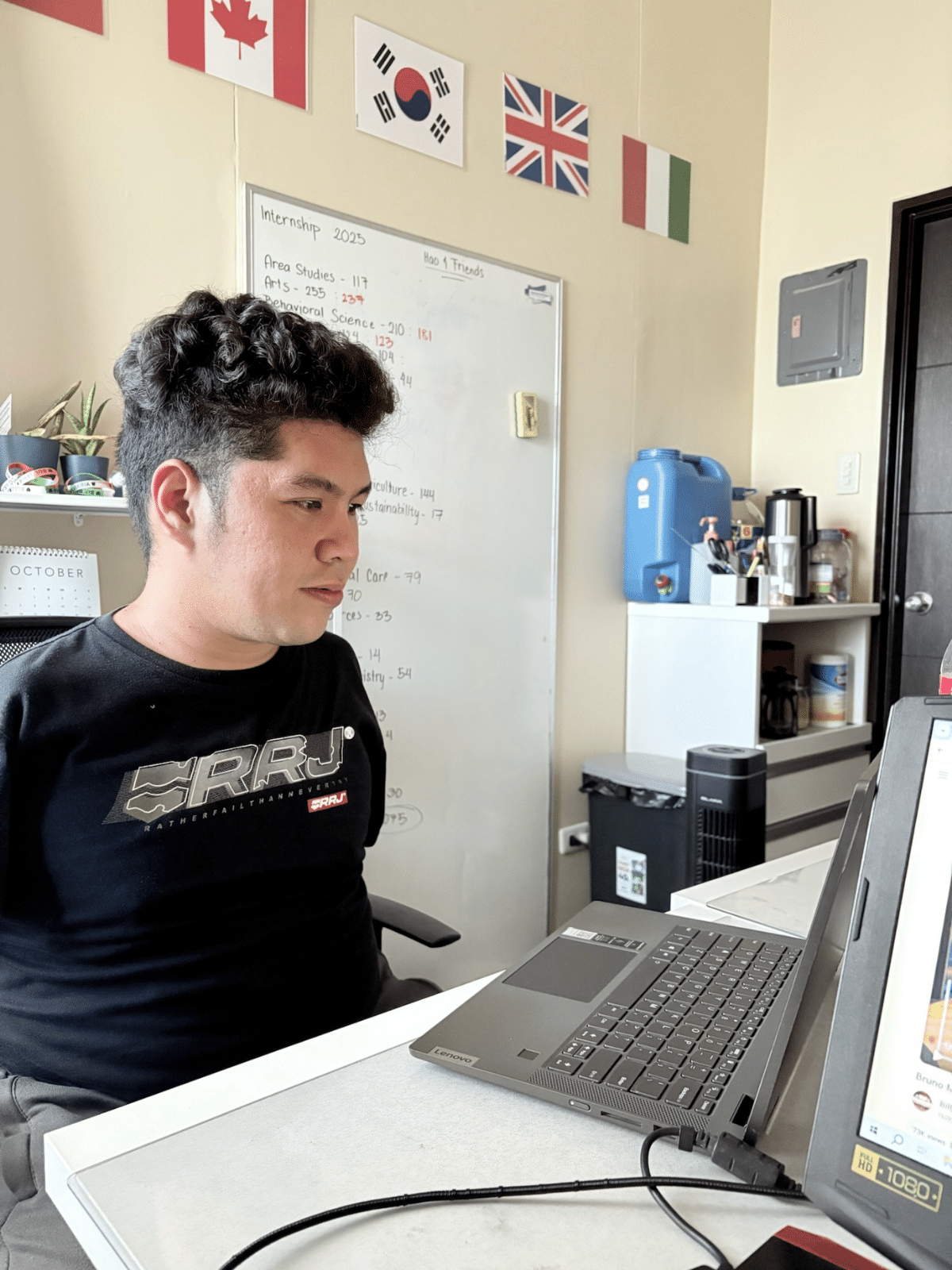
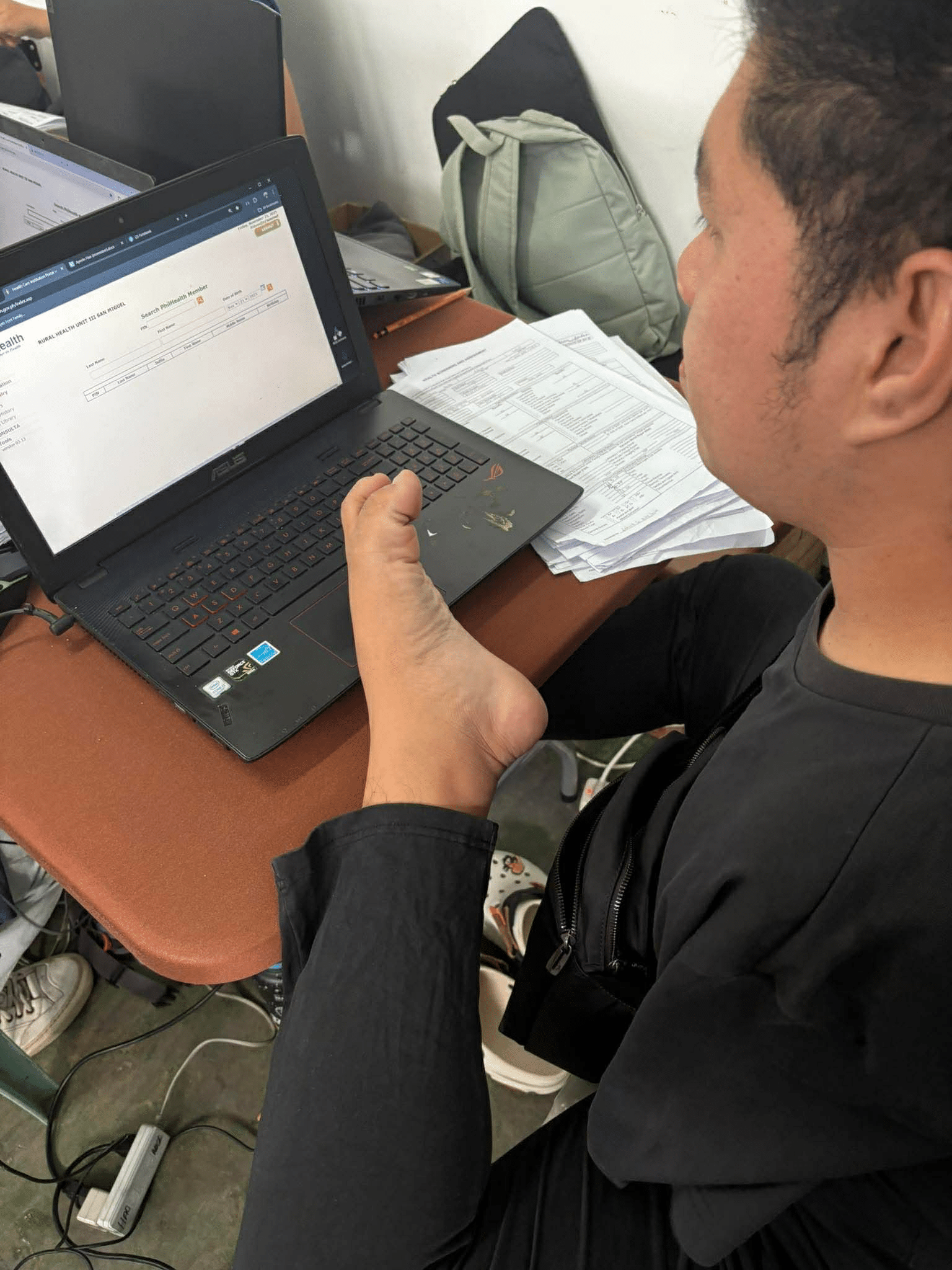
For Ayevin Hao, a 27-year-old BS Information Technology graduate of the University of the East (UE), that work happens differently. Every line of code, every command, is done with his toes.
Born without upper extremities in Zambales and raised in Bulacan, Hao no longer sees that as something missing.
“Every time I code, I forget that I’m using my feet,” he said. “I feel complete in everything I do.”
He said this matter-of-factly. For him, it is simply how things are.While national data show that only a small portion of persons with disabilities complete higher education in the Philippines, Hao’s journey reflects what is possible when barriers are removed.
At UE, accommodations such as a custom workstation allowed him to focus on learning and coding. A study by the Second Congressional Commission on Education (EDCOM II) found that affirmative action policies in higher education remain uneven and inconsistently implemented, particularly in public universities, despite the free tuition law. In this context, small adjustments—such as a modified table or an adaptive classroom—can spell the difference between staying in school and dropping out.Hao was provided with a lower table so he could work without straining his legs and feet.
Beyond physical support, Hao also received guidance from mentors, including College of Computer Studies and Systems dean Ma. Teresa Borebor and college secretary Bernadette San Diego.
Still, the journey was far from easy.
A recent study by the Second Congressional Commission on Education, or EDCOM II, found that affirmative action policies in Philippine higher education remain uneven and inconsistently implemented, particularly in public universities, despite the country’s free tuition law. In that context, small adjustments—like a workable table or a classroom that adapts—can mean the difference between staying in school and dropping out.
At UE, Hao was given a table built lower than the usual, so he could work without straining his legs and feet. It wasn’t something he made a big deal out of. It just allowed him to do what everyone else was doing—sit down, open a laptop, and get to work. Beyond the physical support, Hao benefited from the consistent guidance of his mentors—the Dean of UE College of Computer Studies and Systems, Ma. Teresa Borebor, and College Secretary Bernadette San Diego—who were always ready to assist whenever he needed help, ensuring that no challenge became insurmountable.
It wasn’t easy for Ayevin.
“Pag may error, sobrang stress (When there’s an error, I get really stressed),” he admits. “Pero hindi puwedeng sumuko kasi pangarap ko ‘to (But I can’t give up because this is my dream).”
He describes the process the same way many developers would—trial and error, long hours, frustration that builds when something doesn’t work. The difference is how early that difficulty started for him.
Hao came from the Accountancy and Business Management track in senior high school. When he entered UE in 2019 as an IT student, he had no background in coding.
“First year pa lang, gusto ko na mag-shift (Even in my first year, I already wanted to shift courses),” he says. “Sobrang nahirapan talaga ako (I was really struggling a lot).”
What kept him there wasn’t confidence. It was people.
He found friends early on—classmates who stayed, explained things, answered questions, didn’t make him feel like he was behind.
“Tinulungan nila ako (They helped me),” he says. “Kaya tinuloy ko (That’s why I continued).”
His admission journey also included close coordination with the college, with his sister helping facilitate the process so he could pursue his chosen program.
He got in. That was all he needed.
Daily life as a student came with its own routines. He used to live in Sta. Mesa and woke up at 5:30 in the morning for a 7:30 class. By 6:30, he had to be ready. From there, it was a short walk, then a jeepney ride to Recto, getting down near Bustillos–Legarda, and walking the rest of the way to campus.
Mornings were manageable. Evenings were harder.
Classes ended around 6 p.m., and getting home could take until 7:30 or 8. Eventually, he asked his family if he could stay somewhere closer. The commute, more than anything, wore him down.
Still, he stayed.
When face-to-face classes resumed after the pandemic, he met the group he would eventually become closest to.
“They didn’t treat me as different,” he says. “Ako pa nga ’yung joker sa group (I was even the joker in the group).”
They studied together, helped each other out, and after Thursday classes, they would go out—eat, have coffee, talk about whatever was going on in their lives.
It was in those conversations that something shifted for him.
“Na-realize ko, hindi lang ako ‘yung may problema (I realized I’m not the only one dealing with problems),” he says. “Sila rin, meron din (They have their own struggles too).”
There was no pity in that space. Just shared stress, shared deadlines, shared life.
His friends, he says, were also surprised by him in ways he didn’t expect. He drives. He rides a motorcycle. Things they themselves didn’t know how to do.
At home, he moves the same way he does everywhere else—quietly, efficiently. He cooks, prepares meals, goes about routines without needing assistance.
“Cooking is therapy,” he says.
He laughs when talking about lechon kawali. “Hindi ako makaiwas agad sa talsik (I can’t always avoid the oil splatters),” he says, explaining how he has to sit close to the stove to reach. It’s the kind of detail he shares casually, like it’s part of the job.
Then the pandemic came, and like many students, he had to stop.
His father lost his job after getting COVID-19, and the family had to prioritize expenses. Hao chose to step back from school so the money could go to his father’s medical needs.
“I knew the struggle,” he says.
But he didn’t stop working. During that time, he took on different roles—freelance sales agent for Converge, data encoder for PhilHealth, and later a web developer trainee.
When he returned to UE, he wasn’t the same student who left. He had already seen what work looked like outside school.
That mindset showed up again during his on-the-job training.
The college suggested placing him at the Dean’s office, where things would be easier and more accessible. He chose otherwise.
“Gusto ko maranasan ‘yung outside world (I wanted to experience the outside world),” he says. “Kung hanggang saan aabot ‘yung kaya ko (To see how far I can go).”
He took a placement outside, in a regular company setup, where expectations were the same for everyone. He finished with a 1.75 grade.
At UE, adjustments were made where needed, but the expectations stayed. The custom table helped him function, but it didn’t make things easier in terms of academic workload or standards.
“It’s not about giving special treatment—it’s about taking away the barriers so students can actually do what they’re capable of,” Dean Borebor says.
Now, Hao works across different programming languages—Python, Java, HTML, CSS—and focuses on front-end development and user interface design.
“The only standard that matters is the quality of the code,” he says.
There’s nothing performative in how he talks about his work. No dramatic framing. Just the reality of learning something difficult and sticking with it long enough to get better.
In a country where inclusion in higher education is still uneven—and where many students with disabilities never make it this far—his story sits quietly in that space between what exists and what’s possible.
He doesn’t frame it that way himself.
For now, his plans are simple.
“Wala pa sa isip ko mag-abroad (I’m not thinking of working abroad yet),” he says. “Gusto ko muna magka-experience dito (I want to gain experience here first).”
Step by step.
The day he graduated at the SMX Convention Center last February, he stood among more than 500 UE students. Nothing about it was staged. No grand moment. Just the end of something he had worked through for years.
“I feel complete,” he says. “And that’s enough.”
Ayevin’s message to future graduates is simple: “Don’t let the lack of something define your capacity. If you have the will to learn and the right support, the world has no choice but to make room for you.” /dp


