





Edsa at 40: Filipinos want democracy to curb poverty, inequality


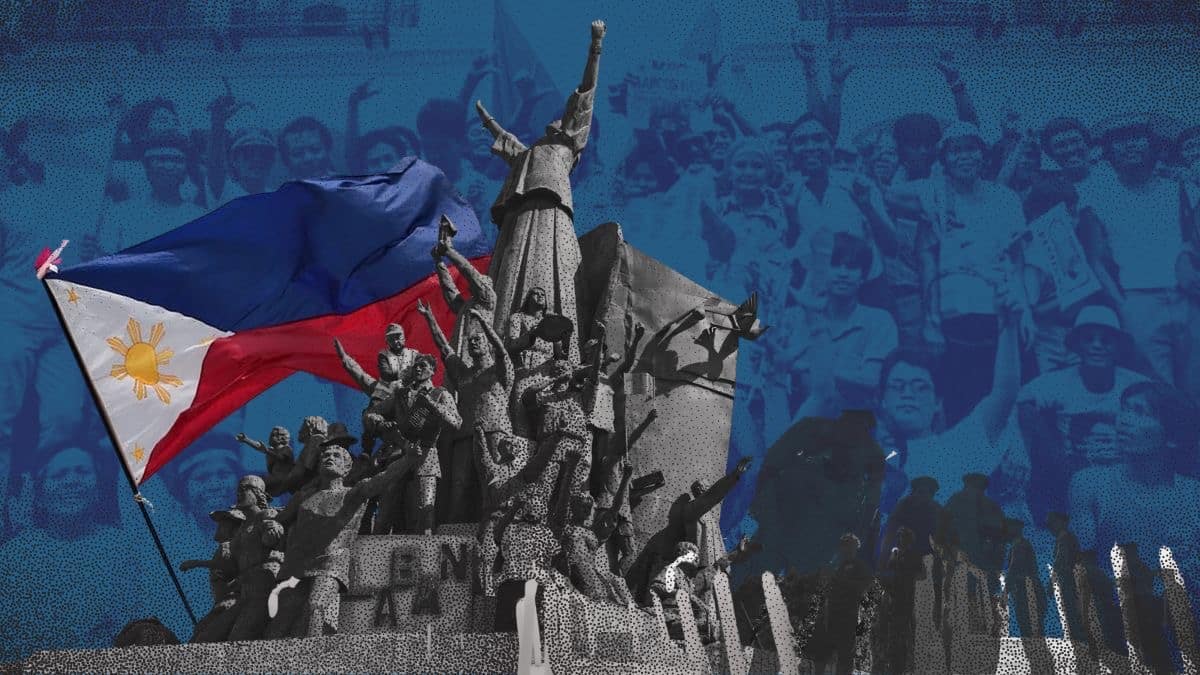
MANILA, Philippines —This week, on Wednesday, Feb. 25, the Philippines will mark the 40th anniversary of the Edsa People Power Revolution that ousted dictator Ferdinand Marcos Sr. in 1986. Survey results suggest, however, that beyond freedom, Filipinos now expect more from the protest that restored democracy.
Drawing on results from Wave 6 (2022) of the Asian Barometer Survey, Alicor Panao, an Inquirer data scientist and associate professor at the University of the Philippines, said public priorities appear to have shifted over time.
Based on the survey, 67 percent of Filipinos said reducing economic inequality should be prioritized, while 28 percent preferred protecting political freedom when asked to choose between the two.
About 2 percent said both are important.
“These are not fresh numbers, but they offer a timely lens to reflect on democratic priorities four decades after Edsa,” Panao said, referring to the People Power Revolution that ended more than two decades of Marcos’ rule.
“This recalibration of priority is not a rejection of liberty,” he said. “Rather, it suggests that political rights, once the central rallying cry, are now seen as baseline guarantees.”
This means the question is no longer whether Filipinos value political freedom, but what they expect democracy to deliver beyond it, especially in everyday economic life, Panao said.
READ: Poll: Prices, graft, jobs top Filipinos’ concerns
Based on the latest data from Pulse Asia, controlling the increase in prices of basic commodities is the top concern for most Filipinos, especially those in socioeconomic classes D and E in Balance Luzon, the Visayas, and Mindanao.
Regional pattern
Across Southeast and East Asia, the trend is similar, with respondents often emphasizing material conditions over political freedom, such as in Indonesia, which showed an even stronger tilt toward reducing economic inequality at 88 percent.
Mongolia recorded 68 percent, followed by the Philippines. South Korea, Taiwan, Cambodia, and Thailand recorded 64 percent, 63 percent, 58 percent, and 56 percent, respectively, saying economic concerns should be prioritized.
Vietnam was the exception, where nearly 50 percent of respondents appeared to prioritize political freedom.
Slightly more people in South Korea, Cambodia, and Thailand — from 12 percent to 14 percent — indicated that both economic equality and political freedom are important.
Taiwan and the Philippines had very low rates, with only 1 percent and 1.9 percent of respondents saying both were equally important, “suggesting that most respondents make a clear choice,” Panao said.
Based on the latest data from the Social Weather Stations, just over 50 percent of Filipino households consider themselves poor, while 37 percent said they are not poor. Another 12 percent said they are “borderline poor.”
READ: 51% of Filipino families still consider themselves poor – SWS
“Four decades after EDSA, perhaps the more salient questions are: Who benefits from all of it? Who remains at the bottom? Has freedom widened access to economic opportunities?” Panao said.
Tool for a better life
Across Asia, many people prefer economic security over political freedom, including in the Philippines, where 59 percent of respondents in Wave 6 of the Asian Barometer Survey said “economic development is definitely more important than democracy,” Panao said.
When those who prefer development “at least somewhat” are included, the total reaches 82 percent, suggesting that “the public sees governance first and foremost as a tool to reduce poverty and usher in a higher quality of life,” he said.
RELATED STORY: Walang Pasok: Schools, LGUs declare no classes on Feb. 25 for Edsa 40
This focus on the economy is even stronger in Indonesia, where 65 percent definitely chose development over democracy, Panao said.
Conversely, South Korea and Taiwan showed more support for freedom at 18.8 percent and 29.6 percent, respectively.
Even so, Panao said the results were unexpected, noting that these countries are often regarded as models of democratic consolidation in the region.
The findings imply that performance legitimacy — including the ability of a government to provide work and reduce poverty — is the main way people assess regimes, he said, suggesting that support for democracy is not permanent.
RELATED STORY: Edsa’s 40th: Akbayan to file bill declaring Feb. 25 a non-working holiday
“If the economy struggles, people may become open to other forms of leadership,” Panao said.
Across the region, democracy is rarely seen as a goal on its own, he said. “Instead, it is viewed as a partner to prosperity that people may set aside if they feel they must choose between a vote and a job.”
RELATED STORY: EDSA People Power: PRO-7 deploys nearly 3,400 police


