





Crising floods expose gov’t failures — scientist group


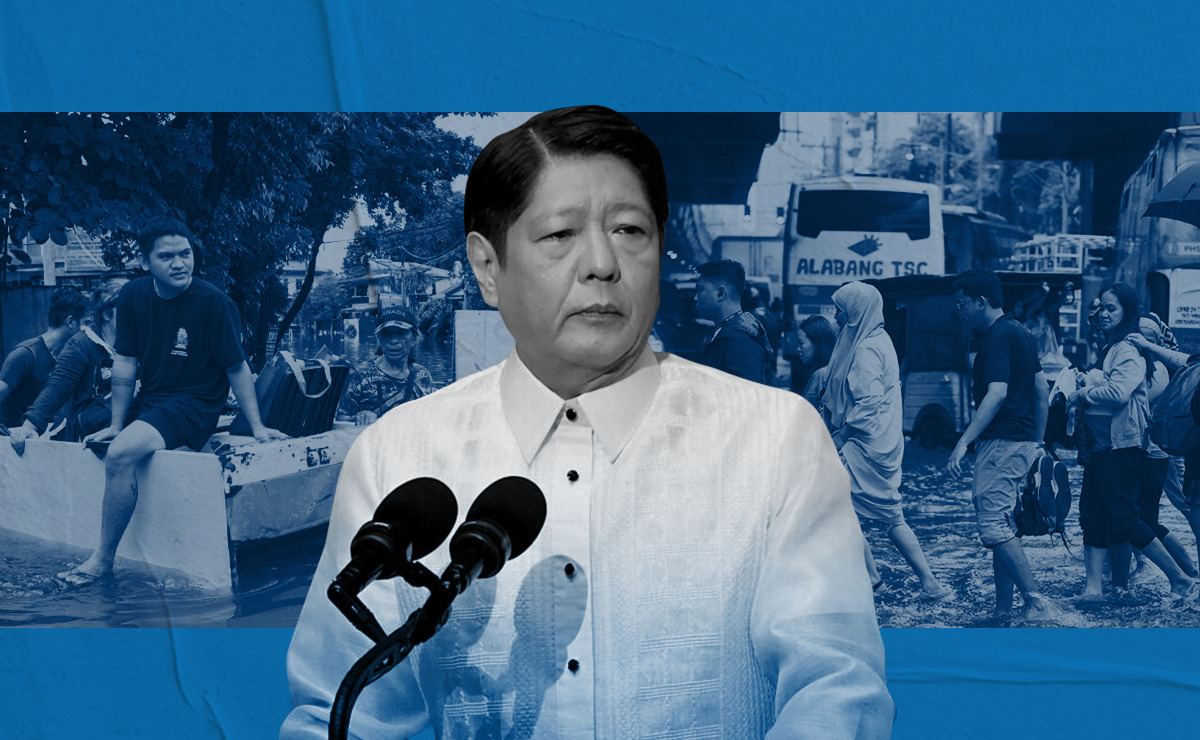
Composite image from Philippine Daily Inquirer photos
MANILA, Philippines—A scientist group decried what it described as the “continued failure and negligence” of the Marcos administration in responding to disasters, as the combined effects of Typhoon Crising, the southwest monsoon, and twin storms Dante and Emong again left parts of Metro Manila and nearby provinces under water.
In a statement on Wednesday, July 24, AGHAM – Advocates of Science and Technology for the People – pointed to what it described as “inadequate disaster response and management” under President Ferdinand Marcos Jr., even as billions have been spent on flood control.
READ: Crising leaves trail of floods, damage as it exits PAR
“One year after the devastating effects of Carina and the enhanced habagat, we are again forced to endure the same perennial problem of inadequate disaster response and management,” said Cleng Julve, secretary general of AGHAM.
AGHAM cited government data showing a total of ₱680.2 billion allocated for flood management programs from 2023 to 2025, with ₱249.8 billion for 2025 alone. But despite this spending, Julve said, “massive flooding continues to devastate communities.”
From July 19 to 22, Metro Manila saw 573 millimeters of rain measured at PAGASA’s Science Garden in Quezon City—more than a month’s worth of rainfall in just four days, based on climatological normal data.
READ: Rains already topped July average; more as Dante meets Emong
“More than a month’s worth of rain fell in four days’ time, but rainfall alone is not to blame,” Julve said. “Metro Manila’s infrastructure is not built for extreme weather events. The projects being done do not respond to our country’s reality as susceptible to typhoons, what more with the changes brought about by the climate crisis.”
Julve and AGHAM scientists argue that flooding is not just a natural hazard, but a sign of deeper policy failures.
They point out that the government’s approach has focused heavily on large infrastructure, while “critical programs like watershed protection, land use planning, and coastal defense are overlooked.”
“Our natural drainage systems have been covered by infrastructure,” Julve said.
“While critical programs like watershed protection, land use planning, and coastal defense are overlooked, environmentally destructive projects such as reclamation, quarrying, and deforestation continue,” she added.
The scientist group also took aim at Marcos’ remarks last year, when he attributed the severe flooding brought by Typhoon Carina to both climate change and the improper disposal of waste by residents.
During his inspection of flooded communities in Metro Manila, Marcos said in Filipino, “We have more flood control now than before, but climate change—this is what the effects of climate change are.”
He added, “The problem is, I hope people learn. Don’t throw your trash anywhere, because it’s the garbage that clogged our pumps, making them less effective than they could be.”
READ: Marcos: People should learn as climate change, trash caused flooding
AGHAM called this explanation “scientifically inaccurate and administratively irresponsible,” insisting that while climate change is a global threat, disaster preparedness “is a national responsibility.”
“Rain is natural, but negligence is a decision. Disaster risk is not just a technical issue—it is political and structural. Climate change is real, but so is incompetence of Marcos Jr.,” Julve said.
“We condemn this administration’s gross negligence in responding to disasters and call for an immediate stop to ecologically destructive projects such as reclamation.”
AGHAM’s statement comes as floodwaters continue to disrupt Metro Manila and nearby areas, displacing families and triggering emergency operations across Luzon.
The group reiterated calls for a more “integrated approach” to disaster risk reduction, including the protection of watersheds and stricter land use planning.
READ: Over 3.2M affected by habagat, Crising, Dante, and Emong – DSWD
As the rainy season intensifies, scientists and advocates are urging the government to overhaul its disaster management policies and to invest in both “soft” and “non-structural” solutions to flooding, alongside infrastructure.


