


IN THE KNOW: GoreBox, Roblox and why the concern


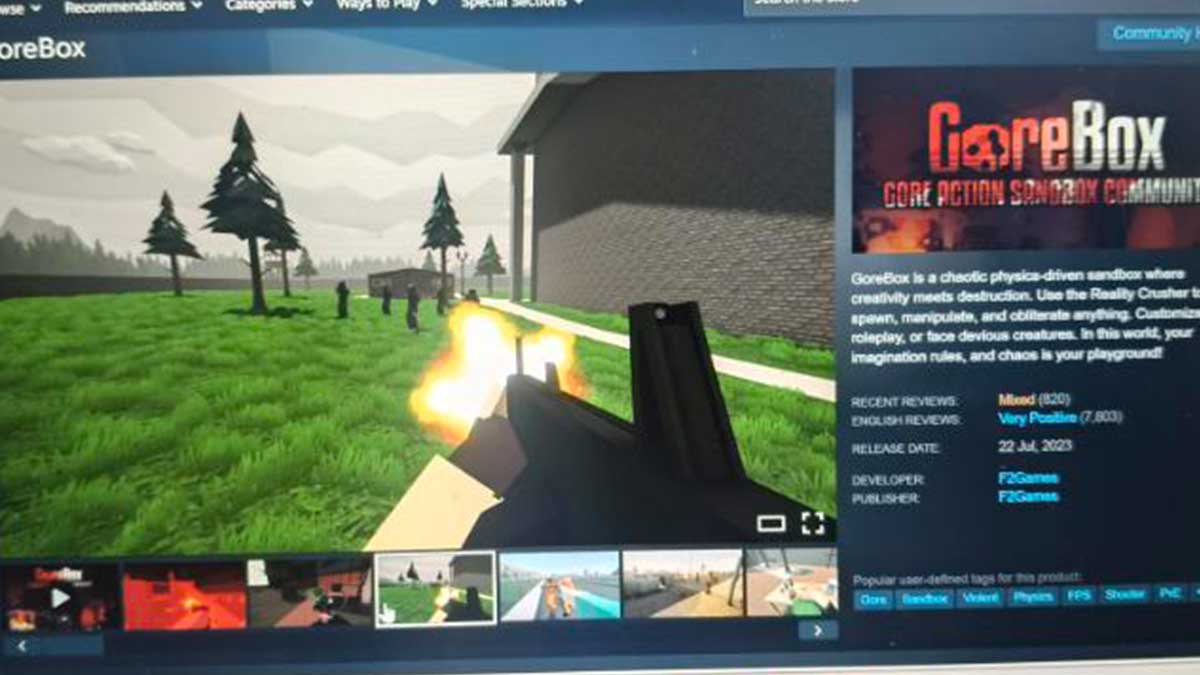
MANILA, Philippines — Authorities and online safety experts have noted that GoreBox shares certain similarities with Roblox, one of the world’s largest gaming platforms, but differs significantly in its content and focus.
Both platforms allow players to create their own virtual worlds, design custom scenarios and interact with other users in user-generated environments. In both cases, players can build maps, role-play, modify characters and participate in multiplayer experiences.
However, Roblox primarily functions as a platform hosting millions of user-created games covering a wide range of genres, from obstacle courses and educational experiences to sports simulations and adventure games. The platform has extensive moderation systems, age-based restrictions and community guidelines intended to limit harmful content.
READ: CICC: Roblox ban still possible if child-protection commitments fail
GoreBox, by contrast, is built around unrestricted sandbox gameplay in which graphic violence is a core feature rather than a by-product of user-created content. While Roblox generally targets a broad audience that includes younger players, GoreBox openly advertises its gore mechanics, weapon systems and destruction-focused gameplay.
The distinction has become a central point in the investigation as authorities seek to determine whether the game’s content may have influenced the suspect’s thinking or behavior.
International concerns
The focus on GoreBox follows previous international cases in which the game appeared in investigations involving youth radicalization.
READ: Current Roblox age identification has ‘loopholes’ — CICC
In January this year, Singapore’s Internal Security Department issued a restriction order against a 14-year-old boy who used GoreBox and Roblox to recreate terrorist attacks and executions while role-playing as a fighter for the Islamic State (IS) group.
Singapore authorities said the teenager had become self-radicalized online and produced pro-IS videos using footage generated from gameplay on both platforms.
Another Singaporean youth previously used Roblox to create IS-themed propaganda videos based on simulated conflict zones modeled after Syria and Marawi City in the Philippines.
While those cases involved extremist indoctrination rather than school violence, they have drawn attention to the role that user-generated gaming environments can play in reinforcing harmful narratives. /cb


