


DPWH chief: SMC must address issues vs Boracay bridge


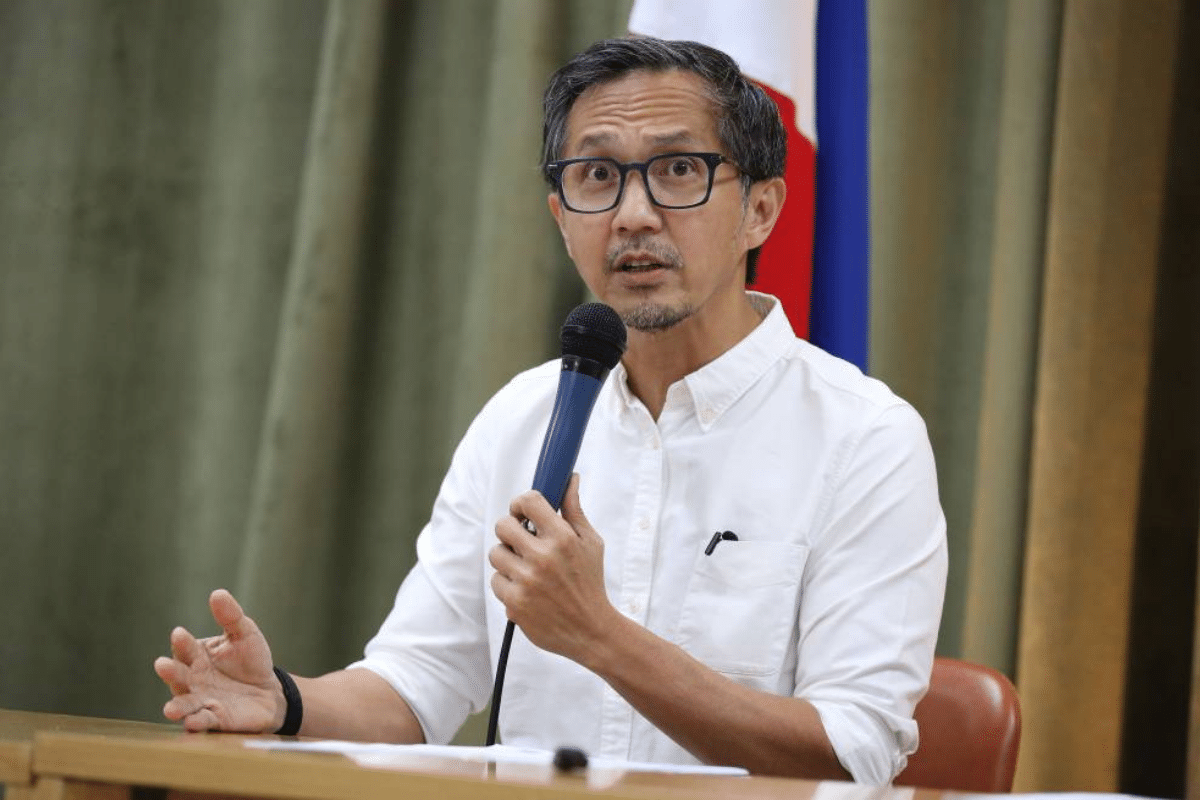
Public Works and Highways Secretary Vince Dizon. INQUIRER FILE / NIÑO JESUS ORBETA
TUBA, Benguet — San Miguel Corp. (SMC), the proponent of the Boracay bridge project, must address all concerns raised by local officials, business and environmental groups, and residents in Aklan province before it can proceed with the infrastructure that would link the resort island to the Panay mainland, Public Works Secretary Vince Dizon said on Friday.
Speaking during an inspection of a damaged section of Marcos Highway here, Dizon said the government’s agreement with San Miguel Holdings Corp. (SMHC), the infrastructure arm of SMC, requires the company to resolve all issues tied to the 2.54-kilometer bridge project that would link Boracay Island to mainland Panay, through Malay town in Aklan.
READ: Witness: Over 10 cash deliveries to DPWH Bulacan since 2021
“In our agreement with [SMC], they must address all concerns. It’s all about livelihood, it’s all about the sustainability of the infrastructure,” Dizon told reporters here.
He stressed that the responsibility to engage stakeholders rests with the private proponent.
“They have to address all the concerns of the local communities … I’m sure (SMC chair and CEO) Ramon Ang will address this,” Dizon said.
Sought for comment on Friday, Ang said they would meet with local government units (LGUs) over the bridge project.
“We will discuss with LGU their concerns,” he told the Inquirer in a text message.
The Department of Public Works and Highways (DPWH) has approved the P7.78-billion public-private partnership (PPP) project, issuing a notice of award on March 30 in favor of SMHC. Under the deal, the company will finance, design, construct, operate, and maintain the bridge.
READ: Marcos OKs toll-free passage for Benguet vegetable trucks
The proposed bridge, a flagship PPP initiative, is intended to provide direct access between Boracay and the Panay mainland, easing transport for residents, tourists, and emergency responders while boosting economic activity. Panay Island in Western Visayas region is composed of the provinces of Aklan, Antique, Capiz and Iloilo.
‘Long-term risks’
Resistance to the bridge proposal dates back to around 2019, when national government agencies first floated the idea of a land link to Boracay as part of the island’s postrehabilitation infrastructure plans under the administration of then President Rodrigo Duterte.
Critics argue that any benefits must be weighed against “long-term environmental risks” and the potential disruption of existing marine transport livelihood, as well as the island’s fragile ecological balance.
In February, nonprofit and multisectoral group Boracay Foundation Inc. (BFI) was among the first to express opposition to the project through a letter to President Marcos.
BFI said it was conveying concerns from business groups, tourism workers, and residents who fear the project could significantly alter Boracay’s natural landscape and strain its fragile ecosystem.
The group said the potential disruptions to coastal processes—including water circulation, sediment movement, and shoreline stability—which are vital to maintaining the island’s white sand beaches.
It also raised concerns about possible negative effects on livelihoods, particularly for transport workers, tourism employees, and small business owners dependent on Boracay’s current systems.
The municipal government of Malay, where Boracay is located, has maintained its strong objection through a resolution passed by the Sangguniang Bayan.
On April 15, the Aklan provincial board approved a resolution strongly calling out the DPWH for awarding the bridge project based on SMC’s unsolicited proposal despite publicized opposition from the provincial government, the Malay municipal government and other groups.
Earlier, the provincial board passed two resolutions—on Oct. 8, 2025, and on April 8—reiterating its disapproval.
Mayors’ position
Also opposing the project is the League of Municipalities of the Philippines-Aklan (LMP-Aklan), mainly citing the same reasons.
In a unanimous resolution passed on April 30, the group stressed that Boracay’s tourism success depends on strict environmental protection and sustainable resource management.
The province’s 17 mayors also cited the rehabilitation efforts made on the island in 2018, stressing the importance of enforcing environmental laws and the limits on Boracay’s carrying capacity.
LMP-Aklan further warned that improved access could trigger a surge in tourist arrivals beyond what Boracay can sustainably support, potentially straining waste management systems, infrastructure, and natural resources.
They also raised concerns about the displacement of livelihoods dependent on the water transport system between the village of Caticlan and Boracay, including boatmen and small operators who may lose income if demand declines.
Copies of the resolution were submitted to Mr. Marcos, the Department of Environment and Natural Resources, the Department of Tourism, and the Department of Labor and Employment.
The Philippine Chamber of Commerce and Industry-Boracay (PCCI-Boracay) also expressed concerns over the project, urging the government to consider more sustainable alternatives.
While supporting development and improved accessibility, the group noted that infrastructure projects must remain “responsible, inclusive, and grounded in long-term sustainability,” given Boracay’s ecological sensitivity.
Instead of the bridge, PCCI-Boracay suggested upgrades in health-care and emergency response systems, coastal protection and reef rehabilitation, improved port facilities in Caticlan, and stronger solid waste management systems. —WITH REPORTS FROM HAZEL P. VILLA, JOEY MARZAN, EMMANUEL JOHN B. ABRIS AND INQUIRER RESEARCH


