





SC: No ‘plain view’ required for searches during lawful arrests


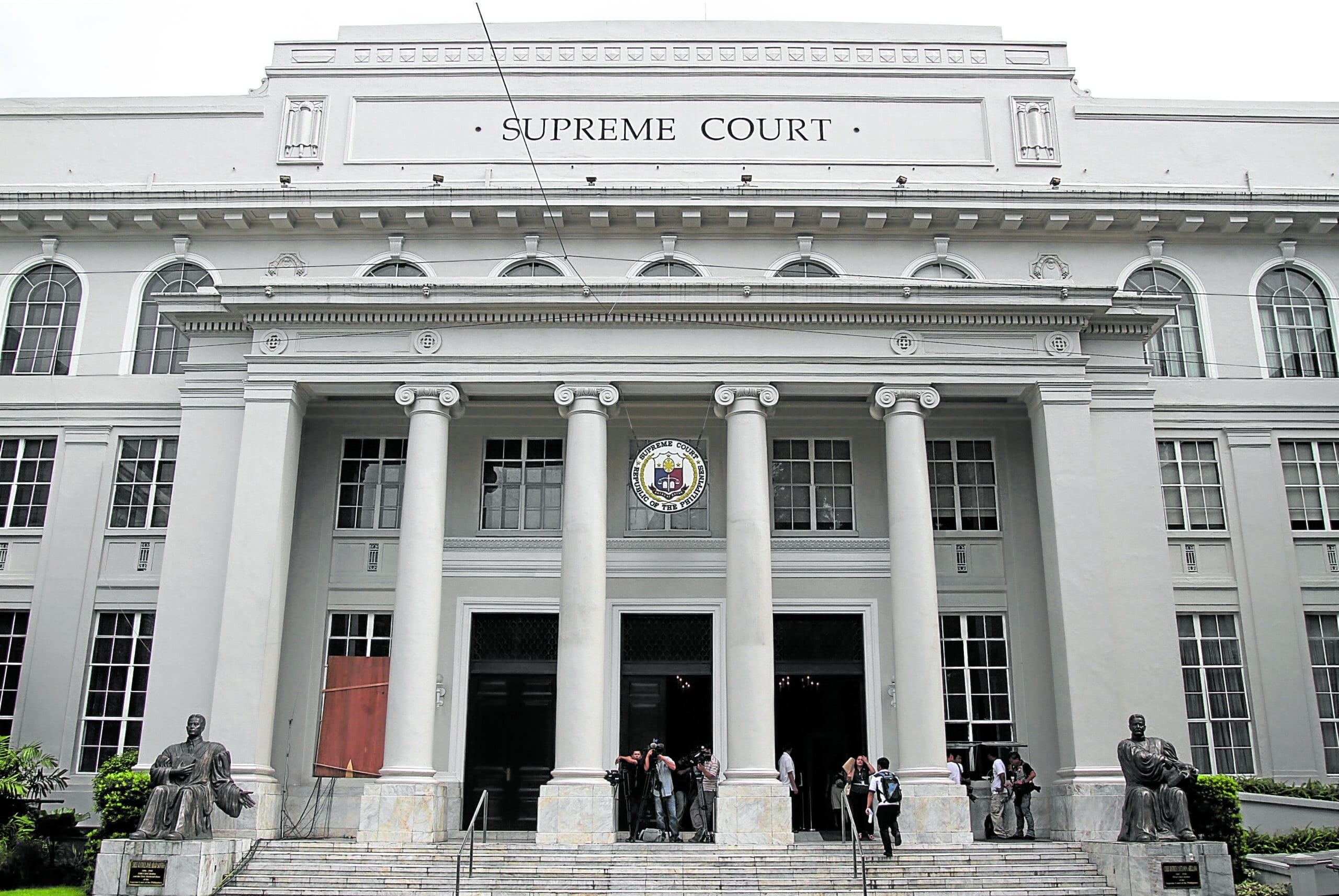
MANILA, Philippines — Items seized during a lawful warrantless arrest are admissible as evidence even if they were not initially visible to the arresting officers, the Supreme Court clarified in a decision made public Wednesday.
In a Decision penned by Associate Justice Ricardo R. Rosario, the SC’s First Division affirmed the conviction of Jeryl Bautista for illegal possession of dangerous drugs under Republic Act No. 9165, or the Comprehensive Dangerous Drugs Act of 2002, as amended.
During the 2017 buy-bust operation, a police officer posing as a buyer received from Bautista a sachet of shabu worth PHP 500. Other officers, a representative from the Department of Justice (DOJ), and two barangay kagawads arrived shortly after.
READ: PH Supreme Court breaks barriers in new virtual court rules
Upon his arrest, an officer frisked Bautista and discovered three more sachets of suspected shabu hidden inside a cellphone charger.
The officer also found a cellphone, screwdriver, weighing scale, and marked money.
The police then marked the four sachets, prepared an inventory of the seized items, and took photographs.
Bautista challenged his conviction arguing that the additional sachets cannot be admitted as evidence because they were not in plain view of the police officers when seized during his arrest.
The Supreme Court defines plain view as a rule that allows law enforcement officers to seize evidence without a warrant if they are lawfully in a position to see it, the discovery is accidental, and the items illegal nature is immediately apparent.
In rejecting Bautista’s argument, the SC said “the plain view doctrine is not always required to justify a warrantless search, particularly when police officers search a person who has just been lawfully arrested.”
It explained that searches and seizures generally require a warrant. If police perform a search or seize property without a valid warrant, any evidence obtained is inadmissible in court.
However, the SC said there are recognized exceptions, and one of these exceptions is the plain view doctrine.
In this case, Bautista was arrested during a buy-bust operation. He was frisked as part of the arrest. While the sachets hidden inside his cellphone charger were not in the officers’ plain view, the SC held that the warrantless search remained valid because it was done as part of a lawful arrest.
To convict a person of illegal possession of dangerous drugs, the prosecution must prove that the accused had the drug, that the possession was not authorized by law, and that it was done knowingly and freely.
The SC found that all these elements were present. The search revealed three additional sachets of shabu hidden inside a cellphone charger. Bautista could not explain why he had the drugs or show any authority allowing him to possess them.
Bautista was sentenced to a maximum of 16 years in prison and ordered to pay a fine of P300,000. /mr


