





SC expands rules on videoconferencing in cases


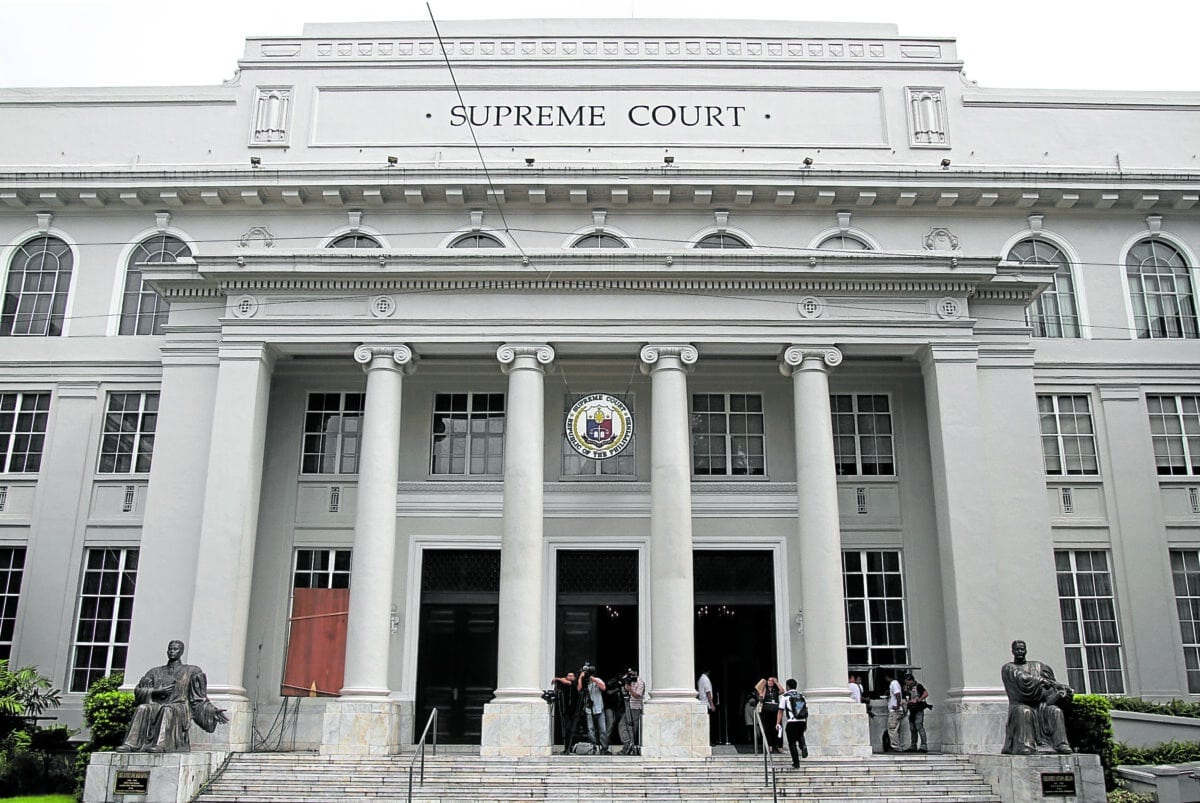
MANILA, Philippines — Persons deprived of liberty (PDLs) and children in conflict with the law (CICL) may now turn to videoconferencing for their remote participation at all stages of the proceedings, according to the amended rules of the Supreme Court on the conduct of videoconferencing.
In an en banc resolution, the Supreme Court has directed first- and second-level courts to make videoconferencing the “preferred mode” among PDLs and CICLs.
First-level courts are those at the city and municipal levels, such as Metropolitan Trial Courts and Municipal Trial Courts, among others; while second-level courts are the Regional Trial Courts.
READ: SC allows embassy hearings through videoconferencing
“For a just, speedy and inexpensive disposition of cases, the court may, on its own instance, order that the proceedings be conducted through videoconferencing at any or all stages,” the high tribunal said in the Nov. 4, 2025, resolution.
Videoconferencing shall be the “preferred mode” for arraignment, bail hearings and hearings for minor incidents, “but not limited to clarificatory hearings, compliance hearings and other similar ancillary matters where the presence of the accused is not necessary,” it noted.
This is, however, “unless the court deems it appropriate for the accused to appear in person.”
But those accused in cases of gender-based violence may be asked to keep their face out of the view of the victims and child witnesses to ensure another layer of protection for them even during videoconferencing.
READ: SC making tech work for more accessible, inclusive justice
https://newsinfo.inquirer.net/2013582/sc-making-tech-work-for-more-accessible-inclusive-justice
The Supreme Court also ordered lower courts to make videoconferencing a viable option for individuals who are “digitally disadvantaged,” including those in far-flung areas.
To achieve this, the courts may establish “access points” in regions where participants to the case can access videoconferencing under court supervision. Court personnel may also be deployed for the provision of temporary or mobile internet access, it noted.
Videoconferencing may also be presided over by justices and judges from remote locations with “justifiable reasons” and with prior written notice or approval from the Office of the Court Administrator when presiding outside their judicial region, the Supreme Court said
The scope of videoconferencing was also widened to cover overseas as well. Aside from Philippine embassies and consulates, offices of the Philippine government abroad may now be set as a venue for remote court proceedings.
The new set of rules, which will take effect on Feb. 16, is an expanded version of the initial guidelines on videoconferencing and remote appearance and testimony for PDLs in correctional facilities in 2019, which served as the basis of a pilot test at the Davao City Hall of Justice and Davao City Jail, as well as the guidelines released at the height of the COVID-19 pandemic.
The push for videoconferencing in court proceedings is in line with the Supreme Court’s Remote Hearing and Equal Access to Law and Justice (REAL Justice) program, an offshoot of the Justice on Wheels launched in 2004.


