





Green groups push back as Manila defends higher garbage fees


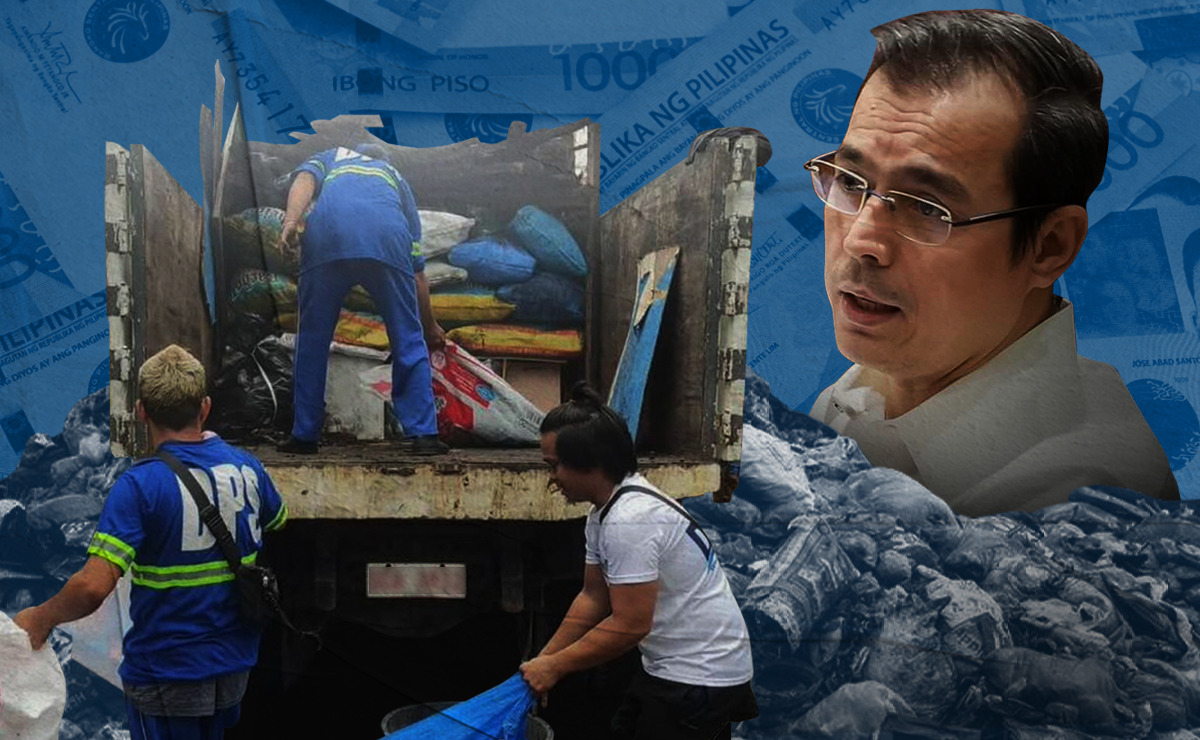
MANILA, Philippines—Environmental advocates rejected the Manila city government’s defense of revised garbage collection fees for businesses, saying Ordinance No. 9151 is legally flawed, lacks transparent computations and could violate national environmental law and constitutional protections.
Ordinance No. 9151, approved by Mayor Francisco “Isko” Moreno Domagoso on December 1, 2025, revises the city’s garbage collection fees for businesses and makes payment a prerequisite for the issuance or renewal of business permits.
In a January 22 statement, the Manila Anti-Incinerator Alliance (MAIA) said Ordinance No. 9151 “does not meet the basic requirements for a valid regulatory fee” under the Local Government Code, which requires that local fees be “fair, reasonable, consistent with public policy, and within what people and businesses can realistically afford.” The group added that the code limits garbage-related fees to the management of “non-recyclable and special wastes.”
MAIA said the ordinance “does not clearly identify what types of waste are being charged, nor does it explain how the fees were computed,” arguing that without this information, “there is no way for the public to assess whether the charges are proportionate or justified.”
READ: Manila waste fee hike, WTE plan draw legal, social concerns
The statement came days after Moreno addressed criticism in a January 19 broadcast of “Talk to the People,” where he acknowledged the sticker shock of the revised fees but defended the increase by breaking down annual amounts into daily and per-employee costs.
“‘Yorme, P1,000 lang po yung binabayaran ko, ngayon P12,000 na, ang laki naman ng itinaas’ pag titignan niyo po yung numero,” Moreno said.
(“Yorme, I used to pay only P1,000, now it’s P12,000. That’s a huge increase.”)
“Pero ulitin natin, babalik tayo sa science. Nino? MMDA at ibang ayensya ng gobyerno. Let’s just say 12,000 lang ang babayaran mo sa negosyo. Then let’s divide it. Tulungan niyo. Divide it by 365 days. Yung 12,000 pesos. Most likely you will arrive between 30 pesos, 31 or 32 pesos per day,” he added.
(“If you look at the number, it looks big. But let’s go back to the science, from the MMDA and other government agencies. Let’s say you pay 12,000 pesos for your business. Then divide it. Divide it by 365 days. Most likely you will arrive at about 30, 31, or 32 pesos per day.”)
Moreno said he used a daily computation because garbage collection is continuous.
“Hindi naman pwedeng Lunes lang ako naghahakot ng basura at sa susunod na Lunes na lang ulit ako maghahakot ng basura. Ang paghakot ng basura ay araw-araw and it costs money—and that money is your money,” he said.
(“I can’t collect garbage only on Mondays and then wait until the next Monday to collect again. Garbage collection is every day, and it costs money—and that money is your money.”)
He added that the city was trying to close what he described as a large funding gap.
“And I will direct it just to fill the gap between—between 110 million and 1.35 billion pesos. That’s why we divide it by 365 days,” Moreno said.
Per-employee breakdown cited
Moreno also addressed small online sellers and employers, saying the cost could be divided further among workers.
“Let’s just say, 32 pesos a day. Hindi niyo pa po binilang yung empleyado niyo. Let’s just say: ‘Yorme, online seller ako. 12,000 na yung babayaran ko, wala naman po akong basura. May tatlo po akong empleyado.’ … ayon sa pag-aaral, direktiba, ang pag compute ng basura ay per capita or per person,” he said.
(“Let’s say it’s 32 pesos a day. You haven’t even counted your employees yet. Let’s say: ‘Yorme, I’m an online seller. I now have to pay 12,000 pesos, and I don’t even have garbage. I have three employees.’ According to studies and directives, garbage is computed per capita, per person.”)
“So, let’s just say, 32 pesos a day. Tatlo ang empleyado mo, i-divide natin. Magkano isang araw? 10 pesos. Mahal po ba? Kayo na po ang humusga,” Moreno added, saying it was “mas mahal po magpatapon ng basura sa kariton.”
(“So if it’s 32 pesos a day and you have three employees, divide it. How much is that per day? Ten pesos. Is that expensive? You be the judge. It is more expensive to pay someone with a pushcart to take your garbage away.”)

He cited a case involving a dormitory to illustrate his point.
“Meron siyang negosyo. ‘Yorme, 54,000 lang po binabayaran ko sa basura every year, ngayon naging 250,000 na.’ … Dormitory. Ilan po yung dormitory? 270. Parang lumalabas po, seven pesos per person,” Moreno said, noting that tenants generate around “0.90—or almost one kilo—of garbage every day.”
(“Someone told me, ‘Yorme, I used to pay 54,000 pesos a year for garbage, now it’s 250,000.’ What kind of business is it? A dormitory. How many residents? 270. That comes out to about seven pesos per person.”)
Moreno also stressed that the revised fees apply only to businesses.
“Tanong: ‘Yorme kami bang naninirahan sa Maynila may garbage bin?’ Wala po, sa business lang po ito,” he said.
(“Someone asked, ‘Yorme, do those of us who live in Manila have a garbage fee?’ No—this is for businesses only.”)
Green groups’ rebuttal
MAIA said the mayor’s explanation did not address what it called the ordinance’s “fundamental legal and policy defects,” including what it described as a mismatch between the broadcast’s per-person framing and the ordinance’s own basis for charging.
In its statement, the alliance cited a social media comment responding to the mayor’s video: “Yung explanation sobrang patawa, ‘may pera naman daw mga negosyante,’ P10 per day daw per employee at araw araw daw yun garbage collection, pero [yung] ordinance per square meter [ang] computation at lagpas lagpas din sa P10 per day.”
(“The explanation is laughable—‘they say business owners have money,’ they say it’s 10 pesos per day per employee, and that garbage is collected daily, but the ordinance computes fees per square meter, and the charges go far beyond 10 pesos a day.”)
MAIA said this “lack of clarity mirrors the defect identified by the Supreme Court” in Ferrer Jr. v. Quezon City (G.R. No. 210551), a 2015 ruling that invalidated a Quezon City garbage fee ordinance for lacking a clear basis and computation.
“The Supreme Court was clear that what matters is not who pays, but whether the fee is directly tied to a specific regulatory service,” said Zelda Soriano, founder and executive director of Community Legal Help and Public Interest Centre (C-HELP), legal counsel supporting MAIA. “Any garbage fee, whether imposed on households or businesses, must correspond to an actual service rendered and cannot be used as a disguised tax or revenue-generating measure.”
City’s legal position
The Manila city government has maintained that the comparison with the Quezon City case is misplaced.
In a January 8 statement, City Legal Officer Luch Gempis Jr. said the Supreme Court ruling involved garbage charges imposed on households and condominium units, with proceeds earmarked for socialized housing.
“In contrast,” he said, Manila’s revised garbage collection fees apply exclusively to business establishments and are imposed as regulatory fees, not taxes, consistent with jurisprudence recognizing the validity of cost-based garbage charges.
READ: Manila defends garbage collection fee hike: First change since 2013
City Treasurer Paul Vega said the revised rates were developed following a comprehensive study to align garbage charges with actual service expenses, noting that the fees had remained unchanged since 2013 despite increases in waste volume and hauling and disposal costs.
What the ordinance states
Ordinance No. 9151, approved by Moreno on Dec. 1, 2025, amends the city’s 2013 Omnibus Revenue Code and imposes a revised schedule of quarterly garbage fees based on the type of business and estimated waste output.
The ordinance states that the “proposed adjustment in garbage collection fees is aligned with the actual garbage production of each business industry,” adding that “the higher the garbage generation for each industry, the higher the garbage collection fee.”
It also notes that the city was advised by the Metropolitan Manila Development Authority to redirect its waste to the New San Mateo Sanitary Landfill in Rizal, which would entail “additional garbage hauling and transportation costs.”

Under the measure, businesses are required to practice waste segregation at source in accordance with Republic Act No. 9003, and the city, through the Department of Public Services and in coordination with barangays, is tasked with establishing or designating materials recovery facilities for processing segregated waste.
The ordinance further provides that garbage fees must be paid as a prerequisite for the issuance or renewal of business permits, and that fees collected shall be allocated primarily to waste management operations, including garbage collection and hauling, equipment procurement, and personnel training, with a portion directed to recycling and composting initiatives.
RA 9003 and WTE concerns
MAIA said the ordinance raises compliance issues with Republic Act No. 9003, or the Ecological Solid Waste Management Act of 2000, which prioritizes waste reduction, reuse, recycling and composting, and excludes incineration as a waste management method.
“This misalignment raises serious questions about compliance with Republic Act No. 9003,” the group said, warning that Manila’s continued reliance on hauling and its push for waste-to-energy (WTE) incineration run counter to both the spirit and intent of the law.
Brex Arevalo, climate and anti-incineration campaigner of the Global Alliance for Incinerator Alternatives (GAIA) Asia Pacific and co-convenor of MAIA, said the mayor’s pronouncements left “many basic questions unanswered,” including “why the sudden increase; why were businesses not consulted; were computations verified; what specific services will this be used for?”
READ: Coalition launched vs ₱26-B waste-to-energy incinerator in Manila
Arevalo added that the group fears the added fees could be used for the proposed waste-to-energy incinerator in Smokey Mountain, which he described as “an illegal and highly-polluting facility that would need hefty government subsidies to construct and operate.”
“This situation is a reflection of the city government’s failure to engage its constituents in policymaking, already missing in the WTE project in Smokey Mountain, and its disinterest in implementing the Ecological Solid Waste Management Act,” Arevalo added.
Constitutional, consultation issues raised
MAIA also warned that the city’s waste policies could violate the constitutional right to a balanced and healthy ecology, saying that by favoring hauling and waste-to-energy schemes that require a constant supply of garbage, the ordinance risks encouraging more waste generation and exposing communities to environmental and health harms.
READ: Clearing the air: Ordinary citizens uncover toxic truths near waste incinerators
“We are alarmed by the vague cost breakdown and the dangerous precedent this sets for future waste-to-energy projects that may further burden residents by paying for hauling to bring tonnes of waste for burning in the plants,” said Niña Estelle, coordinator of Panatang Luntian and co-convenor of MAIA.

The group added that the ordinance conflicts with Manila’s own policy commitments on waste reduction. The group pointed to the city’s 10-year Solid Waste Management Plan for 2025 to 2034, which emphasizes reducing the volume of waste sent to landfills and waterways, and the city’s Action Plan for Plastic Circularity, which commits to achieving zero waste leakage into Philippine waters by 2040.
“Yet, the ordinance prioritizes fee collection for hauling and disposal, without demonstrating how it will meaningfully reduce waste generation,” the alliance said, adding that a system focused mainly on collecting fees and moving waste “does not address the root of the problem.”
It criticized what it called the “consistent absence of genuine consultations” in waste policy planning centered on hauling and waste-to-energy incineration, warning that this approach is “now leading to economic and physical displacements, and soon, pollution and environmental crisis.”
Call for transparency
MAIA challenged the city government to “make public its computations for this grossly unjust and anti-Manileño garbage fee increase,” and urged the full implementation of RA 9003 “with strong public participation.”
“Until the ordinance is aligned with law, public policy, and constitutional protections, green groups maintain that Ordinance No. 9151 remains legally vulnerable and harmful to Manila’s people and environment,” the group said.


