





DOH resumes vax drive


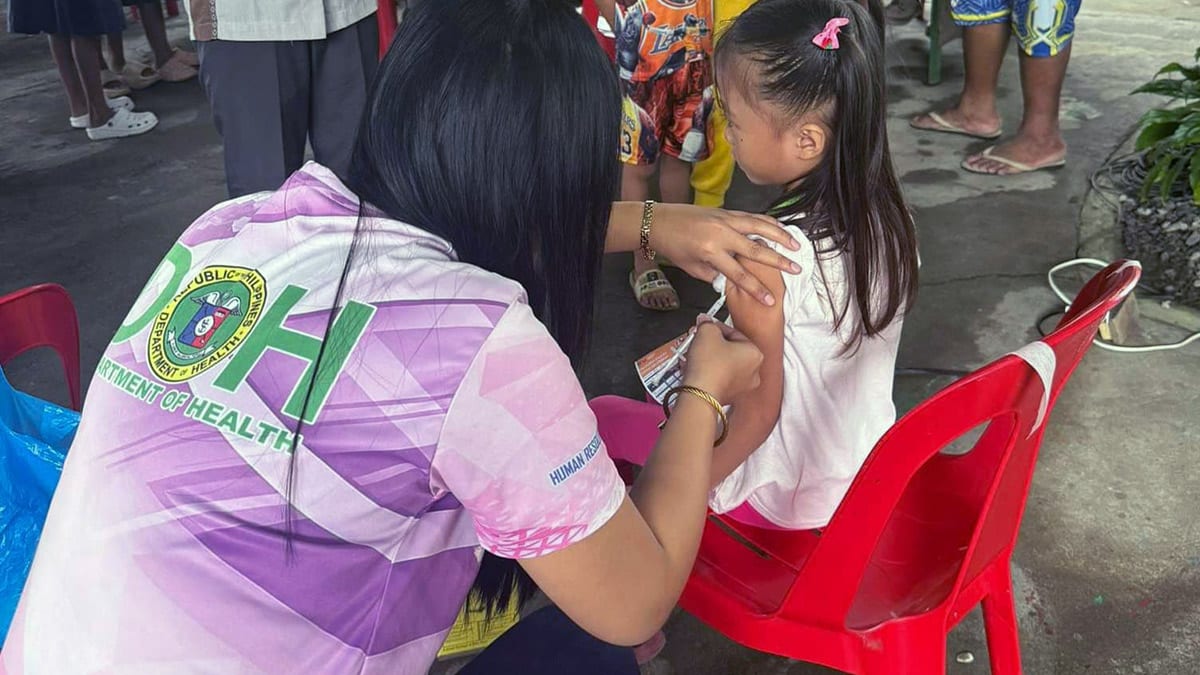
PHOTO COURTESY OF HEALTHY REGION 1 FB
MANILA, Philippines—The Department of Health (DOH) will resume its immunization program against measles and rubella starting next month to address a significant 29 percent increase in the number of cases in the country this year.
Called the “Ligtas-Tigdas Vaccination” program, the DOH said in a statement that the program will be launched in Mindanao, particularly the Bangsamoro region, from Jan. 19 to Feb. 13 next year.
This will be followed by another immunization activity in June, this time in Luzon and Visayas.
READ: Lack of storage facilities hounding vaccination drive – DOH
The DOH said it posted 4,843 cases of measles-rubella across the country, which is 29 percent higher than 2024’s 3,748 cases. As of Dec. 6 this year, of the recorded cases, 73 percent, or 3,511 cases, were unvaccinated.
The majority of these cases were in the National Capital Region (1,027 cases), Bangsamoro Autonomous Region in Muslim Mindanao (768 cases), and Cavite, Laguna, Batangas, Rizal, and Quezon (505 cases).
Years of no vaccines
Health Secretary Teodoro Herbosa said the significant increase could be due to the “many years of unvaccinated children.”
“So, this coming 2026, we’ll conduct a supplemental immunization activity. We’ll get children aged 6 months old to 6 years old, and we’ll have them vaccinated against measles and rubella,” he said.
Measles and rubella are both highly contagious viral infections, caused by different viruses with distinct characteristics. Measles is caused by the rubeola virus, while rubella is caused by the rubella virus.
Can be risky
Both diseases are preventable through vaccination, and rubella, also known as German measles, is typically a mild illness but is known to be risky, particularly to pregnant women, especially in the first trimester.
The risk of fetal infection is as high as 90 percent if a woman contracts rubella early in pregnancy, and up to 80 to 90 percent of such pregnancies result in miscarriage or stillbirth.
Maternal infection can lead to congenital rubella syndrome in the fetus, which may result in severe birth defects such as deafness, cataracts, heart defects, and neurological disorders. /cb


