





Solon: Middle ground between dynasty ban, voters’ will needed


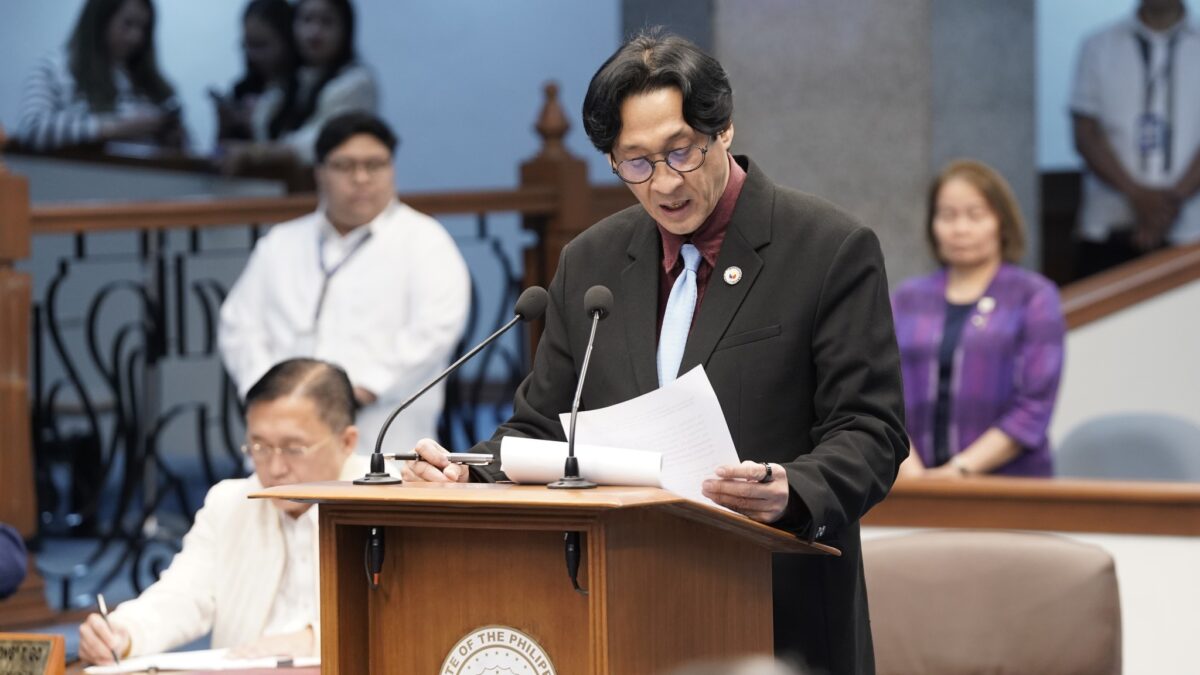
MANILA, Philippines — While he supports proposals to define what political dynasties are, Isabela 1st District Rep. Antonio Albano believes there is a need to find a middle ground between banning this practice and considering the choices made by people to avoid voter disenfranchisement.
Albano, in an ambush interview on Wednesday, said he supports the push for an anti-political dynasty bill filed by his fellow Isabela lawmaker, House of Representatives Speaker Faustino “Bojie” Dy, he understands that there has to be discussions on the matter.
“Well, I am co-author of that, we really have to define what political dynasties mean without infringing on the individual rights of the person, because a person’s vote — if you are given the right to vote, you also have to be given the right to run in office,” Albano told reporters at the Batasang Pambansa complex.
“It is really up to the people. And so what we really have to really define, and I am still open, if there is a way to limit people from running from office, this representation, in my opinion, is open to debate. But you are gonna infringe on the individual rights of a person, because as a taxpayer, you are allowed to vote and also to run,” he added.
According to Albano, what he is certain about anti-political dynasty proposals is that there should be a ban on appointing individuals to whatever position if they are related to elected officials.
“The problem with not defining, and that is what Speaker Bojie did as said in our meetings and yesterday’s […] session, that we need to define what the political dynasties mean in terms of probably not in the democratic process but more so in the political sense of appointments. In my view, that is one view. That’s why we are opening this bill up to criticisms, to ask the people to join us,” he explained.
“Ultimately, the will of the people is the voice of God, vox populi, vox dei. You cannot just limit ourselves in asking, especially for those good public servants. Now, when it comes to being in office and then you appoint your son, your mother, your siblings, that’s, I think, that should be the line,” he added.
During the resumption of session on Tuesday, Dy said the House will now focus on other bills — including a possible Anti-Political Dynasty Bill — as the chamber has finished discussing the proposed 2026 national budget.
Dy said pursuing such a measure would be in fulfillment of the 1987 Constitution’s provisions, which ask Congress to define what a political dynasty is.
“Second, regarding the proposed Anti-Dynasty Bill filed here. It is time to face another point of discussion stated in our Constitution, the passage of a law against political dynasties,” Dy said.
READ: Dy vows to focus on next measures, like anti-political dynasty bill
Dy admitted that his statements may be met with raised eyebrows, as his family has been considered a fat dynasty in their home province of Isabela.
Last October 22, Dy released his statement of assets, liabilities, and net worth (SALN), which indicated that he has a total net worth of P74 million. However, what caught netizens’ eyes were the 16 relatives that Dy indicated to be in various government posts.
This includes his son Faustino “Inno” Dy V, former Isabela 6th District representative and now Echague town mayor; son Francis Faustino Dy, former Echague mayor and now Isabela vice governor; brothers Victor Dy and Manuel Faustino Dy, who are both board members in Isabela; and daughter-in-law Alyssa Sheena Tan-Dy, mayor of Santiago City.
READ: Speaker Dy releases SALN; Net worth at P74 million
Albano’s family likewise has been involved in Isabela’s local politics, sharing most of the posts with the Dys. Albano admitted that several of his relatives are incumbent officials, noting that the family has been in Isabela for over a century already.
“I admit that I come from a political dynasty, our family has been there for 130 years. My great-grandfather was mayor, alcalde de mayor of Cabangan, Isabela in the 1800s, in the 1890s. My grandfather was a congressman in the 50s […] my father is the third-longest (tenured) public servant (at) 62 years,” Albano said.
“So how do you define who among us should run because my brother is now governor of Isabela, and who will determine who among us should run? Is it the people? It becomes a big problem,” he added.
Several bills seeking a ban on political dynasties have been filed before the House of the 20th Congress. Last July, one of the first bills of the Makabayan bloc was House Bill (HB) No. 209, or the proposed Anti-Political Dynasty Act.
The proposed Section 4 under the bill prohibits dynasties by placing these two provisions:
- No person shall hold or run for any elective national or local office simultaneously with another within the fourth degree of consanguinity or affinity, whether legitimate or illegitimate, full or half blood; and
- No person within the prohibited civil degree of relationship to an incumbent elected official shall immediately succeed to the position of the latter.
The bill, should it become a law, will be applicable for the subsequent elections.
READ: Makabayan bloc files House bill banning political dynasties
Bukidnon 2nd District Rep. Jonathan Keith Flores, despite being part of a political family, also filed a similar bill as he believes it is time for Congress to pass a measure that defines and bans political dynasties.
Flores said last July 4 that he filed the bill banning immediate relatives from succeeding an incumbent elected official even if it was against his own interests, in order to level the playing field.
READ: Professed ‘nepo baby’ solon wants bill to ban political dynasty
According to Flores, a candidate who has relatives in a specific position could already gain several advantages — like as simple as name recall — that other bets do not have. /das


