





Brown planthoppers ravage rice fields in Cagayan Valley


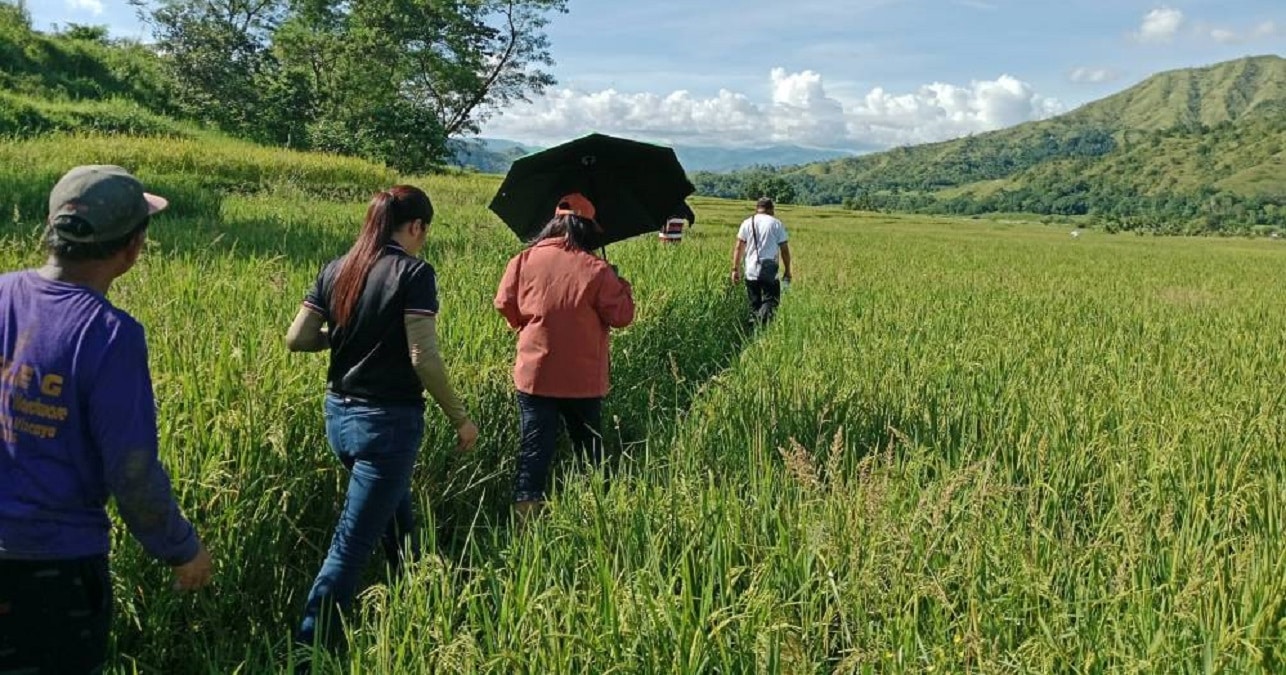
INFESTED Government agriculturists on Saturday inspect brown planthopper-infested farms in Aritao, Nueva Vizcaya. —PHOTO FROM MINDA FLOR AQUINO
CITY OF ILAGAN, ISABELA, Philippines — Brown planthoppers, locally known as “ulmog,” have been bugging farmers in Cagayan Valley, destroying about 115 hectares of rice fields, the Department of Agriculture’s Regional Crop Protection Center Region 2 (DA-RCPC2) reported on Saturday.
Agricultural technicians have reported cases in the provinces of Cagayan, Isabela, Nueva Vizcaya, and Quirino, sparing only the province of Batanes.
Most cases have been validated on Saturday, such as in Aritao town in Nueva Vizcaya, but would continue regionwide, said RCPC-2 head Minda Flor Aquino.
READ: Rice farmers to get P7,000 aid in 2026 as House tackles moratorium issue
Technicians reported high cases in Aritao, as no mitigation was immediately available due to late reporting, she noted.
“Aritao (farmers) have reported late, and it has been nearing [the] harvesting period now,” she said on Saturday.
Other validating teams have also tracked palay farms with reported cases in the City of Ilagan and the towns of Angadanan, Cabatuan, Dinapigue, Mallig and Roxas, all in Isabela.
Hopper burn
The sap-sucking brown planthoppers can cause wilting and complete drying of rice plants, known as “hopper burn” during heavy infestations.
The regional crop agency said adult and nymph hoppers use their piercing mouthparts to pierce the leaf blades and leaf sheaths of rice plants to suck the sap. After harvest, the planthoppers migrate to grasses or spread to new rice crops and live for up to 20 days.
Symptoms have been observed, including blackening of stems by sooty molds caused by fungi and bacteria, as well as gradual discoloration from yellow at the tip to browning, drying out, and collapsing during the “milk” or “dough” stages.
During the tillering-to-flowering stages, the crop protection workers have noted damage due to heavy planthopper infestation, such as orange-yellow before becoming brown and dry, resulting in the plant dying.
Overuse of insecticides
A study by the International Rice Research Institute has estimated that farmers lose nearly 40 percent of their rice crops to pests, and the brown planthopper has been one of the most serious pests.
Overuse of insecticides has been cited as one culprit, as predators and parasites were killed, but the planthoppers would resurge.
“Natural insects and microbes have been beneficial, as they are enemies of brown planthoppers,” Aquino said.
Aquino has urged farmers to check their farms regularly by looking at the plant’s base, where it is shaded and where humidity is high, and inspect for the sooty mold fungi that often accompany a large number of insects.
“The presence of more than 3-5 insects per tiller is considered high and [needs] more intensive observation and possibly insecticide treatment,” the RCPC head said.
To address infestation, Aquino cited biological controls, which are planthoppers’ enemies—such as spiders, ladybird beetles, dragonflies, damselflies, mirid bugs, and wasp parasitoids—that attack eggs and fungal pathogens (Beauveria bassiana and Metarhizium anisopliae). /cb


