





Zero balance billing program sustainable – Marcos


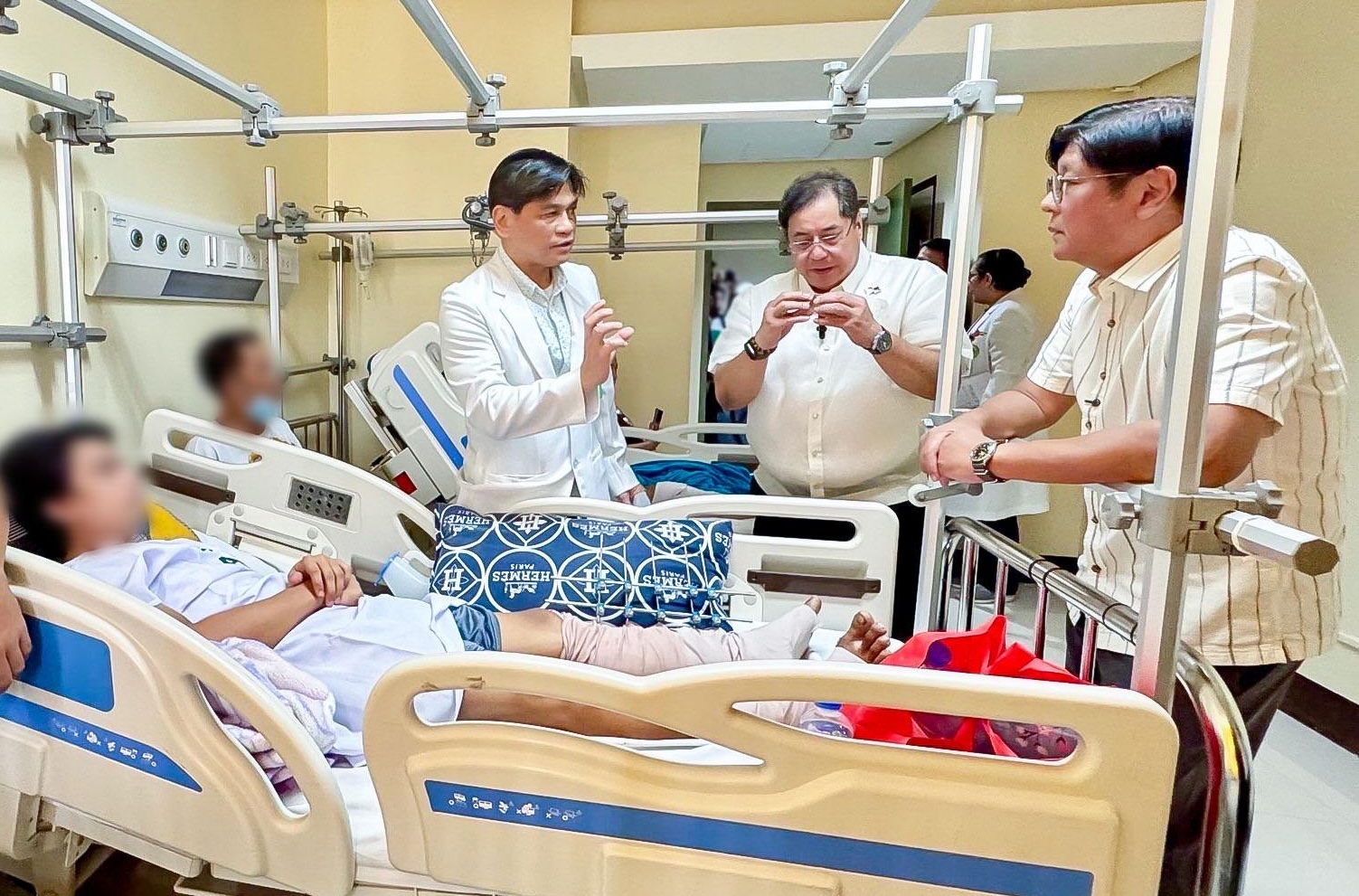
Photo taken last month shows President Ferdinand R. Marcos Jr. and Health Secretary Teodoro Herbosa at the East Avenue Medical Center in Quezon City to check whether the ‘zero balance billing’ program is being properly implemented. (Presidential Communications Office)
MANILA, Philippines — President Ferdinand R. Marcos Jr. maintained that his administration can sustain the Zero Balance Billing Program despite rising healthcare costs.
READ: DOH: Zero-billing helped 298,221 patients
“Yes. I don’t do anything that I cannot sustain. Alam mo, may – may isip akong negosyante (I have the mind of a businessman). It has to be self-sustaining. Otherwise, it doesn’t work,” Marcos said in the third part of the fourth episode of his BBM podcast.
“Why even do it in the first place? People will come to rely on the service, and then after 5 or 10 years, you’ll just take it away from them — right? What’s the point of that?, he added.
Under the Zero Balance Billing program, patients in DOH hospitals no longer have to pay for medical services, medicines and the professional fee of doctors.
Marcos then acknowledged that while healthcare is indeed expensive, this is where government funds are intended to be used.
“It’s not to be kept in the bank. It’s there [to be spent] so that people can have healthcare for free or cheap. That’s the whole point of PhilHealth,” said Marcos.
According to Marcos, this also applies to the government’s other projects that benefit the public, including the P20 peso per kilo rice program.
“As long as the money goes where it should, we can afford all of it. It’s that simple.” /gsg


