





Marcos: Zero budget for DPWH flood control projects in 2026


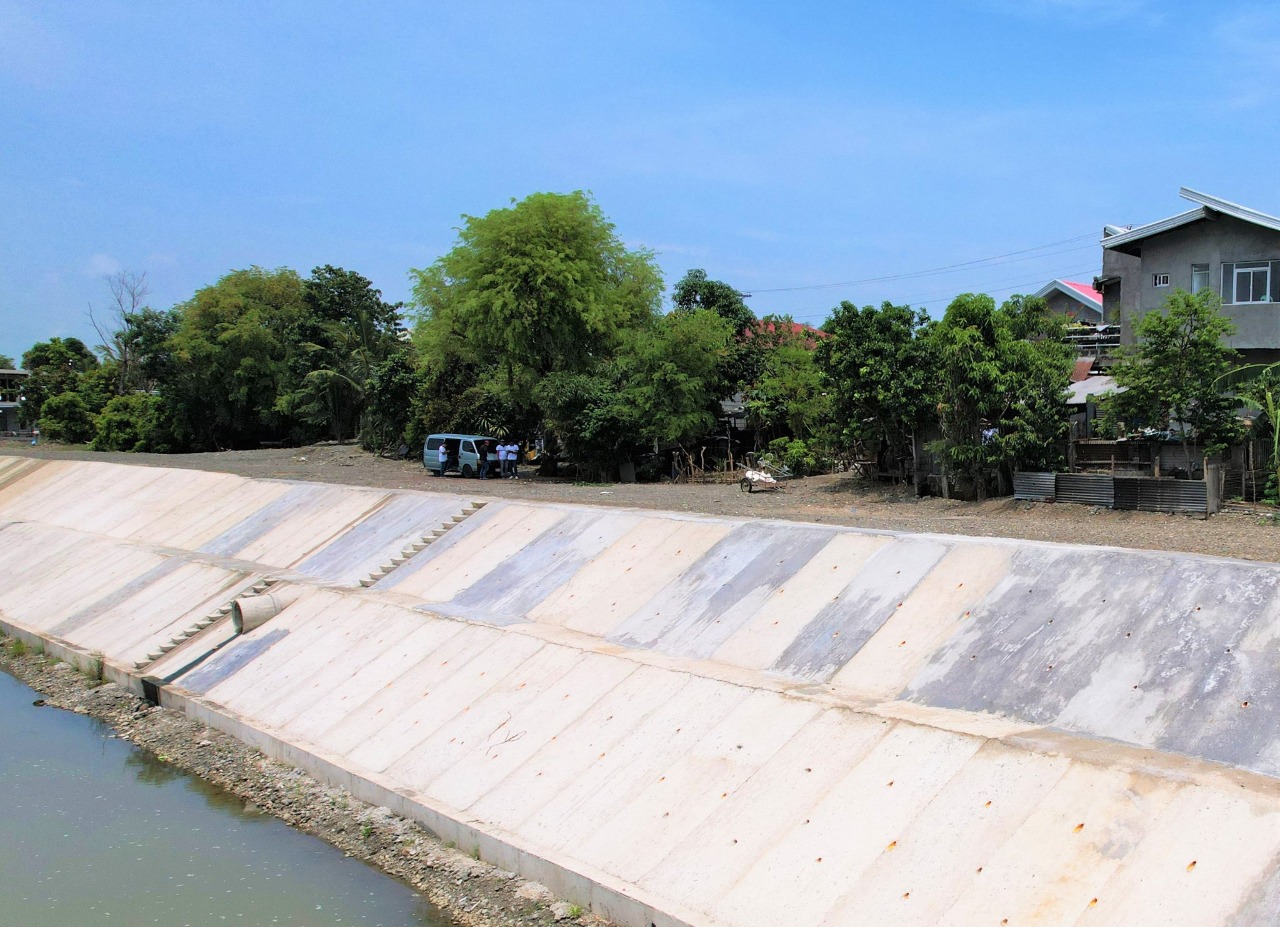
A Department of Public Works and Highways flood control project in Nueva Ecija (Photo courtesy of DPWH)
MANILA, Philippines — There will be no budget for flood control projects implemented by the Department of Public Works and Highways (DPWH) next year as part of the executive branch’s move to rid the proposed 2026 national budget of anomalous and problematic line items, President Ferdinand R. Marcos Jr. said on Monday.
“We have already accomplished a lot as of now [in the review]. Number one, we are already seeing that all the flood control projects that were supposed to be included in the 2026 budget may no longer be necessary,” the President said in the second part of the BBM Podcast episode aired on Monday.
“So, there will be no budget for flood control in 2026, because there is still P350 billion for 2025 that has not really been spent. So, the work will continue,” he added.
The DPWH and the Department of Budget and Management (DBM) are conducting its sweeping review of the former’s proposed budget in the 2026 National Expenditure Program (NEP).
Under the 2026 NEP, the DPWH asked Congress for P250.8 billion for its flood management program, which is more than a quarter of the agency’s P880-billion budget proposal.
The proposed budget for flood control projects of the DPWH was slightly higher than the P248 billion in the 2025 General Appropriations Act.
But according to Marcos, this does not mean that there would no longer be flood control projects to be constructed in 2026.
“This does not mean we will stop the flood control projects. What it means is that we will now make sure that the spending is correct, the implementation is correct, the design is proper, among other things,” he said.
READ: Due to time limits: Back-to-zero DPWH budget impossible, says Dizon
For this to happen, Marcos would be willing to sit down with the contractors — many of whom were implicated in the ongoing investigations both by the executive and legislative — to fix the poorly constructed projects.
The contractors would shoulder all the expenses in repairing and modifying their own projects.
“And then how do we do this? As I’ve said, I am interested in talking with the contractors so that they finish the work, [and] that they fix it,” Marcos said.
“They must complete it according to specifications. But at their cost, okay? They should not expect the government to pay for it. They must fix their projects,” he added.
Marcos was adamant the House of Representatives would not do with its earlier threat to revert the NEP back to the executive due to several problematic provisions that remained in the budget proposal.
“No, it’s not a possibility,” the President said.
“Unilaterally, from our end in the Executive, I already instructed the DPWH to review and to rewrite its budget,” he added.
The now abandoned bid of the House to return the NEP to Malacañang followed revelations by lawmakers that several line items in the DPWH’s budget proposal were either redundant, duplicated, or were allocated for projects that were already deemed completed.
The House of Representatives gave the DPWH and the DBM no later than Sept. 16 to submit all new errata, amendments, proposals, and provisions relating to the budget.
It also suspended further deliberations of the DPWH’s 2026 budget until they have done so.
The NEP is prepared by the Executive branch, specifically the DBM, and is the blueprint for next year’s government expenditures.
It is submitted to Congress to serve as the basis for the General Appropriations Bill, which originates in the House, before it is passed by the entire Congress and signed into law by the President as the General Appropriations Act.
Executive Secretary Lucas Bersamin on Sunday said Malacañang does not anticipate a reenacted budget, calling it “counterproductive.”
According to Bersamin, Marcos has “a sound economic sense” and wants the budget process to move forward.
“We always want the country to move forward, not to go back or slow down,” he said.
The Palace also allayed fears that the President’s order of review of the NEP would result in a reenacted budget.
Malacañang said the budget process is still within schedule, with the President expected to sign Congress’ spending bill before the end of the year. /gsg


