


Caap issues warning against smoking, vaping onboard aircraft


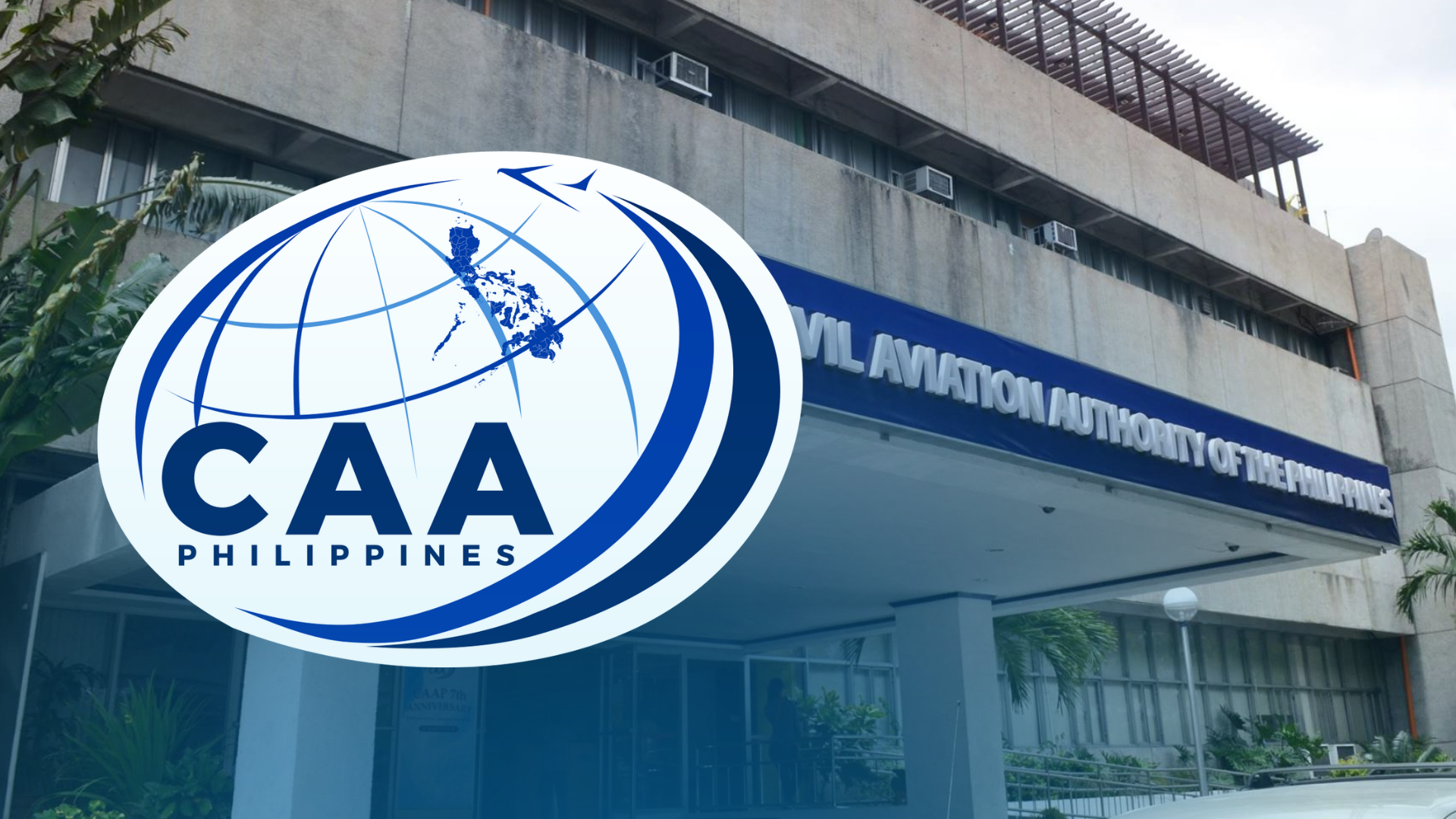
Civil Aviation Authority of the Philippines (Caap).
MANILA, Philippines — The Civil Aviation Authority of the Philippines (Caap) has warned the public that those who will be caught smoking or vaping during air travel will face penalties.
This came after the Caap said in a statement on Friday that it received reports by airlines about incidents of smoking or vaping onboard aircraft.
READ: Caap: Zambales flight school still under monitoring
The aviation authority underscored that pursuant to the Philippine Civil Aviation Regulations on the Restriction on Smoking on Board Aircraft, in relation to Republic Act (RA) 9211, or the Tobacco Regulation Act of 2003, and RA 11900, or the Vaporized Nicotine and Non-Nicotine Products Regulation Act, smoking and vaping are strictly prohibited, and violators may face penalties.
Under the Tobacco Regulation Act of 2003, those who are caught smoking in public facilities, such as airports and airlines, will be fined P500 to P1,000 for the first offense, P1,000 to P5,000 for the second offense, and P5,000 to P10,000 for the third offense.
Meanwhile, individuals vaping in public facilities under the Vaporized Nicotine and Non-Nicotine Products Regulation Act will be imposed a P5,000 fine for the first offense, P10,000 for the second offense, and P20,000 for the third offense.
“Smoking or vaping in flight not only disrupts operations but also poses serious fire hazards in a confined, pressurized environment, where even minor incidents can escalate rapidly,” the Caap emphasized.
The agency likewise said that it is currently intensifying the enforcement of regulations protecting passengers and crew from risks associated with prohibited onboard activities.
READ: Confusion as AirAsia flight lands in Gimpo instead of Incheon in Korea
It urged airline passengers to follow cabin crew instructions, pay close attention to in-flight safety demonstrations, and observe “No Smoking” signs at all times.
“Any violations should be immediately reported to flight attendants or the Aviation Security Group for prompt action,” said the Caap. /mr


