Quantcast
Latest Stories

Did young Rizal really write poem for children?

By

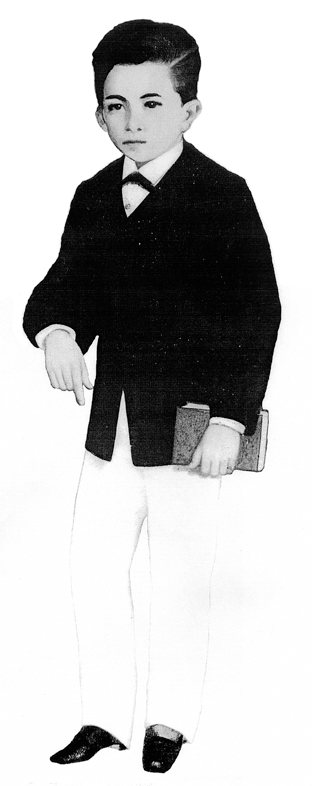
ENHANCED photo of the young Jose Rizal at the age of 14.

IN 1892, Jose Rizal began a new novel in Tagalog.

He realized that in order to reach a wider readership in his country, he had to write in his native tongue.

During this time of exile in Hong Kong, his elder brother, Paciano, had completed a translation of the “Noli Me Tangere” from the original Spanish into Tagalog that was corrected and finalized by Rizal.

Envisioned as a popular edition with illustrations by Juan Luna, this book was never to be. The original manuscript translation by Paciano has since been missing.

Nevertheless, Rizal completed a chapter of his satirical Tagalog novel and gave it the title “Makamisa” (After the Mass), but unfortunately he did not have the energy to complete it.

He stopped writing in Tagalog and began anew in Spanish. The drafts of this work were first published in 1993 in my book “Makamisa: The Search for Rizal’s Third Novel.”

Rizal spoke and wrote in Tagalog fluently, but he was unable to write a whole novel in his mother tongue. This is quite surprising for is he not, like Manuel L. Quezon, inextricably linked to the adoption of Tagalog as the national language of the Philippines?

Most quoted line

Isn’t the most quoted line from Rizal’s many poems that from “Sa Aking Mga Kabata” that goes, “Ang hindi marunong magmahal sa sariling wika/masahol pa sa hayop at malansang isda.” (He who loves not his own language/is worse than a beast and a stinking fish.)

Did Rizal write this poem at 8 years old? Did Rizal write this poem at all?

No original manuscript, in Rizal’s own hand, exists for “Sa Aking Mga Kabata,” traditionally believed to be his first poem.

Rizal had 35 years to publish or assert authorship. He did not. The poem was published posthumously, a decade after his execution, as an appendix to “Kun sino ang kumatha ng ‘Florante: Kasaysayan ng Buhay ni Francisco Baltazar’ at pag-uulat nang kanyang karununga’t kadakilaan” (Manila: Libreria Manila-Filatelico, 1906.) by the poet Herminigildo Cruz as follows:

Sa Aking Mga Kabata

Kapagka ang baya’y sadyang umiibig
sa kanyang salitang kaloob ng langit.
sanlang kalayaan nasa ring masapit
katulad ng ibong nasa himpapawid.

Pagka’t ang salita’y isang kahatulan
sa bayan, sa nayo’t mga kaharian,
at ang isang tao’y katulad kabagay
ng alinmang likha noong kalayaan.

Ang hindi magmahal sa kanyang salita
mahigit sa hayop at malansang isda,
kaya ang marapat pagyamaning kusa
na tulad sa inang tunay na nagpala.

Ang wikang Tagalog tulad din sa Latin,
sa Ingles, Kastila, at salitang angel,
sapagkat ang Poong maalam tumingin
ang siyang nag-gawad, nagbigay sa atin.

Ang salita nati’y tulad din sa iba
na may alfabeto at sariling letra
na kaya nawala’y dinatnan ng sigwa
ang lunday sa lawa noong dakong una.

Provenance

Tracing the provenance of the poem to its source, Cruz claims to have received the poem from his friend, the poet Gabriel Beato Francisco, who got it from a certain Saturnino Raselis of Lukban, a bosom friend of Rizal and teacher in Majayjay, Laguna, in 1884.

Raselis is alleged to have received a copy of this poem from Rizal himself, a token of their close friendship.

Unfortunately, Raselis’ name does not appear in Rizal’s voluminous correspondence, diaries or writings. When Jaime C. de Veyra established the definitive canon of Rizal’s poetry in 1946 with a compilation published in the series “Documentos de la Biblioteca Nacional de Filipinas” (Documents from the National Library of the Philippines) “Sa Aking Mga Kabata” was not published in the original Tagalog but in a free Spanish translation of the Tagalog by Epifanio de los Santos as “A mis compañeros de niñez.”

Tagalog, according to the 8-year-old Rizal, has its own alphabet and letters. It goes back to pre-Spanish times. The precocious child even compared Tagalog with Latin, English, Spanish and “the language of angels,” whatever that is.

Second look

Filipinos raised on textbook history that depicts Rizal as a superhuman genius should give the poem a second look and ask, “Was it really written by an 8-year-old from Calamba just learning to read at his mother’s knee?”

The poem could not have been written in 1869 when Rizal was eight based on the use of the letter “k,” which was a reform in Tagalog orthography proposed by the mature Rizal.

In Rizal’s childhood they spelled words with a “c” rather than “k.” Further, the word “kalayaan” (freedom) is used twice. First, in the third line of the first stanza, there is mention of sanlang kalayaan (pawned freedom).

Was Rizal aware of the colonial condition at this young age? Kalayaan appears the second time in the last line of the second stanza.

Encounter with ‘kalayaan’

These two references ring a bell because kalayaan as we know it today was not widely used in the 19th century. As a matter of fact, Rizal encountered the word first in the summer of 1882 when he was 21 years old!

In a letter to his brother, Paciano, dated Oct. 12, 1886, Rizal related difficulties encountered with Schiller’s Wilhelm Tell that he was translating from the original German into Tagalog:

“I’m sending you at last the translation of Wilhelm Tell by Schiller which was delayed one week, being unable to finish it sooner on account of my numerous tasks. I’m aware of its many mistakes that I entrust to you and my brothers-in-law to correct. It is almost a literal translation. I’m forgetting Tagalog a little, as I don’t speak it with anyone.

“… I lacked many words, for example, for the word Freiheit or liberty, one cannot use the Tagalog word kaligtasan of course because this means that he was formerly in some prison, slavery, etc. I encountered in the translation of Amor Patrio the noun malayá, kalayahan that Marcelo del Pilar used. In the only Tagalog book I have, Florante [at Laura], I don’t find an equivalent noun.”

‘El Amor Patrio’

“El Amor Patrio” was the first article Rizal wrote on Spanish soil. He wrote it in Barcelona in the summer of 1882 and it was published in Diariong Tagalog in August 1882 both in Spanish and a Tagalog translation, “Pag-ibig Sa Tinubuang Lupa,” by Marcelo H. del Pilar.

If, as Rizal admitted, he did not encounter the word kalayaan until he was studying in Europe at 21 years old, how can he have used it at 8 years old in Calamba?

In light of its complicated provenance and the anachronistic use of the word kalayaan a shadow of doubt has been cast on “Sa Aking Mga Kabata.”

There are only two poems attributed to Rizal in Tagalog, the other is “Kundiman.” Both are questionable. All his documented poems are in Spanish.

If Rizal did not compose “Sa Aking Mga Kabata,” who did?

Our two suspects are the poets Herminigildo Cruz or Gabriel Beato Francisco.

Identifying the true author of “Sa Aking Mga Kabata” is important because millions of Filipino children are miseducated each year during Buwan ng Wika when they are told that Rizal composed a poem on his mother tongue when he was 8.

Will the real author of “Sa Aking Mga Kabata” please stand up for he who does not love his own poem/is worse than a beast and a stinking fish (“ang di magmahal sa sariling tula/mahigit sa hayop at malansang isda”).

To My Childhood Companions (Nick Joaquin translation)

Whenever a people truly love
the language given them from above,
lost freedom will they ever try
to regain, as birds yearn for the sky.

For language is a mandate sent
to each people, country and government;
and every man is, like all free
creation, born to liberty.

Who does not love his own tongue is
far worse than a brute or stinking fish,
for we should foster and make it great
like unto a mother blest by fate.

Like Latin, English, Spanish, or
the speech of angels is Tagalog,
for God, a wise provider, it was
who made and handed it to us.
Like the others, our language was equipped
with its own alphabet, its own script,
which were lost when a storm brought down in woe
the barque on the lake long, long ago.

(Editor’s Note: Ambeth R. Ocampo is the chair of the Department of History at Ateneo de Manila University.)


Follow Us

Follow us on Facebook Follow on Twitter Follow on Twitter


Recent Stories:

Complete stories on our Digital Edition newsstand for tablets, netbooks and mobile phones; 14-issue free trial. About to step out? Get breaking alerts on your mobile.phone. Text ON INQ BREAKING to 4467, for Globe, Smart and Sun subscribers in the Philippines.

Tags: Jose Rizal , Makamisa , poetry , poetry for children

  • http://pulse.yahoo.com/_4SAQCHGR32PNKWI3UHEGWFTRPI lovely

    Ayon dito papaanong
    naisulat ni Jose Rizal ang ganoong klaseng tula sa edad na walong taon kung siya
    ay nagsisimula pa lamang matutong magbasa sa kandungan ng kanyang ina sa Calamba,
    Laguna? Sa edad na walong taon nga ba nagsimulang matutong magbasa si Pepe?
    Hindi ba ayon sa mga aklat si Jose Rizal ay natuto na ng alpabeto sa edad na
    tatlo sa tulong ng kanyang unang guro, ang kanyang ina? At sa edad na lima ay
    may kakayahan na siyang magbasa at magsulat.

    Base din dito
    tinatantya nila na hindi isinulat ni Rizal ang nasabing tula para sa ina noong
    taong 1869 sapagkat ang ginamit ni Rizal sa kanyang mga salita ay ang titik “k”
    sa halip na titik “c” gayong sa panahon noon ang titik c ang ginagamit ng mga
    tao. Alinsunod dito ang pagbatikos nila sapagkat ang “kalayaan” daw ay
    makailang beses nasambit sa tula gayong ang salitang kalayaan ay nabatid lamang
    ni Rizal noong taong 1882 sa gulang na dalawampu’t isa (21). Sapagkat ayon daw
    sa liham ni Pepe para sa kapatid na si Paciano, siya ay nahirapan isalin sa
    wikang tagalog ang Wilhelm Tell na nakasulat sa wikang aleman. Nasambit daw ni
    Rizal na nagkaroon siya ng problema na isalin sa tagalog ang salitang “freiheit
    o liberty”, kaya labis na ipinagtataka ng may akda kung papaanong sa edad na
    walo ay nagamit ni Rizal ang salitang kalayaan.

    Marahil may
    punto nga si Ocampo dito, ngunit sa kanya na rin mismo nanggaling na walang
    orihinal na “manuscript” ang tula ni Rizal, hindi daw ito natagpuan kung kaya
    ay walang matibay na ebidensya na si Rizal nga ang may akda ng tula maliban na
    lang sa taong nag-ngangalan na Saturnino Raselis na nagsasabing kaibigan daw ni
    Rizal mula sa Majayjay, Laguna. Ang tula daw na “sa aking mga kabata” ay
    ibinigay sa kanya tanda ng kanilang pagiging matalik na mag-kaibigan. Sa aking
    opinyon gayong wala rin naman silang nahawakan na tunay na “manuscript” marahil
    ang nailimbag na bersyon ay nagpasalin salin na rin sa kamay ng kung sino sinong
    manunulat at hindi malabong napalitan ang orihinal na ginawa ni Pepe.

    Panay panay din
    ang panunuligsa kay Rizal sapagkat ayon sa kanya ang taong hindi marunong
    magmahal sa sariling wika ay masahol pa sa hayop at malansang isda, ngunit siya
    mismo ay hindi ito ginagamit sa kanyang mga obra. Karamihan o halos lahat ng
    ginawa ni Rizal ay nakasulat sa wikang kastila, ayon din sa may akda ikinumpara
    pa ni Rizal ang wikang tagalog sa wikang latin, ingles, kastila at salitang
    anghel.

    Hindi ibig
    sabihin na kapag hindi mo ginamit ang wikang tagalog sa iyong mga nobela, aklat
    at mga tula ay hindi mo na mahal ang iyong sariling wika. Bagamat ang mga akda
    ni Rizal ay nakasulat sa wikang kastila naniniwala ako na siya mismo ay hindi
    maihahalintulad sa hayop at malansang isda, marahil ang mga salita dito ay
    banyaga ngunit ang nilalaman ay patungkol pa rin sa paghihirap ng inang bayan
    sa kamay ng mga mananakop. Siguro ay may sariling adhikain si Rizal kung kaya’t
    ginawa niya ang mga obra niya sa wikang banyaga, baka batid niyang hindi ito
    maiintindihan ng mga dayuhan kung kaya imbes na wikang tagalog ay mas pinili
    niyang gamitin ang wikang banyaga. Ayon sa aking pagkakaintindi kung kaya’t
    inihalintulad ni Rizal ang wikang tagalog sa ibang wika ay nais niyang ipabatid
    sa atin na magkakatumbas lamang ito at pantay pantay kaya nararapat lamang na
    mahalin ito at pagyamanin.

    Pinagdududahan
    ang kakayahan ni Rizal sa pagkakagawa ng tulang “sa aking mga kabata”, sino nga
    ba ang tunay na may akda? Wala akong naiisip na dahilan upang siya ay magtago
    at hayaan na lamang na si Jose Rizal ang umani ng papuri sa tulang ito. Ang
    konsepto ng “plagiarism” ay nagsimula noong 1621, kaya naniniwala ako na
    pwedeng pwede ito gamitin laban kay Jose Rizal kung hindi talaga siya ang
    sumulat neto. Bagamat hindi ito isang matinding krimen ay mapagbabayad naman
    niya ng danyos si Jose Rizal sa pagnanakaw ng kanyang tula.

    Tecson, SSC MANILA

  • Anonymous

    After reading this article, I somehow believed that Rizal was not the true writer of “Sa aking mga kabata”. Based on the reasons stated above by Mr, Ambeth Ocampo, one would really doubt if Rizal has ever written the said poem. A lot of details regarding Rizal and this poem are questionable and I think that one should stand up and clarify the issues so that, the true author can be recognized and be given the credit because “Sa aking mga kabata” is truly an impressive and inspirational poem that will be learned by many Filipinos in many generations to come.

  • http://pulse.yahoo.com/_MR4FZFHUCYUNCFCHW45R3GSGTM jenny

    Nang matapos kong basahin ang artikulo ni Ambeth R. Ocampo ay napaisip din ako hinggil sa kung sino talaga ang nagsulat ng tulang “Sa aking mga Kabata”. Hindi natin maikakaila na may angking galing at katalinuhan ang ating bayaning si Dr. Jose Rizal. Dahil sa kakayahan niya, hindi rin malayong makakagawa talaga siya ng isang tula. Ngunit sa mga ebidensyang sinabi ni Ambeth Ocampo ay lumalabas na hindi talaga si Rizal ang gumawa ng tulang “Sa aking mga Kabata”.
    Maraming mga bagay ang kailangan klaruhin hinggil sa isyu na ito. Kailangan mabigyang kasagutan na ang mga katanungan tungkol dito upang mabigyan na ito ng linaw para sa ating lahat.

    Balila, SSC

  • http://pulse.yahoo.com/_2VN726UFV42LTCNWHC6BEBMGSQ MARIAN

    maraming wika sa Pilipinas ang hindi napagbatayan ng wikang pagbansa dahil sa Tagalog lang ang pinagbasihan nito noong 1935. isa ang tulang ito sa nakapag-udyok ng hindi gaanong nakatulong sa ating mga Pilipino sa usapin ng kaakuhan (identity), wika at pagkakaisa.

  • http://pulse.yahoo.com/_2VN726UFV42LTCNWHC6BEBMGSQ MARIAN

    iba ang Pilipino sa Filipino na wikang pambansa natin ngayon.


Copyright © 2013, .
To subscribe to the Philippine Daily Inquirer newspaper in the Philippines, call +63 2 896-6000 for Metro Manila and Metro Cebu or email your subscription request here.
Factual errors? Contact the Philippine Daily Inquirer's day desk. Believe this article violates journalistic ethics? Contact the Inquirer's Reader's Advocate. Or write The Readers' Advocate:
c/o Philippine Daily Inquirer Chino Roces Avenue corner Yague and Mascardo Streets, Makati City, Metro Manila, Philippines Or fax nos. +63 2 8974793 to 94
Advertisement

News

  • Ex-Guatemala president extradited to US
  • Toronto mayor denies he smokes crack cocaine
  • Many teachers deputized for poll duty still unpaid
  • A double life ends
  • Agnes: Manila paper to cover Gwen notebooks
  • Sports

  • Tigers, Falcons score; Blazers stun Tams
  • GM Paragua shares Asian chess top spot with Li
  • Dazed Beermen try to get back at Thais today
  • Sportswatch
  • Catalan, Lim lead Jr Masters champs
  • Lifestyle

  • Ninoy Aquino’s birthday is ‘Day of Reading’
  • You can’t sink in the Dead Sea
  • In New York, Filipino costume and set designer Clint Ramos wins Obie Award
  • Josh Bowman steps into a new role
  • Fashion, fame and Daniel Grayson
  • Entertainment

  • Cannes: Dern a leading man again in ‘Nebraska’
  • Demi Lovato is a work in progress
  • Stars’ ‘shameful’ secrets revealed
  • Penchant for loopy and messy details
  • Nora and Vilma go indie
  • Business

  • Court of Appeals stops field trials of genetically modified eggplant
  • GDP on track to meet 6-7% target
  • Stocks continue to decline
  • BSP chief says capital flight to spare PH
  • Imports contracted in Q1
  • Technology

  • Statement of Smart Communications
  • Yahoo takes big leap with $1.1B deal for Tumblr
  • Poll: More US teens turn to Twitter; Facebook old
  • Tips to avoid becoming an identity theft victim
  • Filipinos in flight want to go online
  • Opinion

  • Brillantes’ tantrums
  • Pointed questions for the Comelec chair
  • Social enterprise as innovative business model
  • Perennial irony
  • Voters like election surveys
  • Global Nation

  • Seamen may file complaints at sea
  • Rescue of Russian mountaineer from Mt. Mayon proved costly
  • PCG report on grounded US ship due
  • Fil-Am staffers and students join UC Medical Center strike frontline
  • Kids make art to help rescue other kids from neglect
  • Marketplace
    Advertisement
    Federland
    Federland
    © Copyright 1997-2013 INQUIRER.net | All Rights Reserved