





Sotto: Marcos’ slash of unprogrammed funds aims for clean 2026 budget


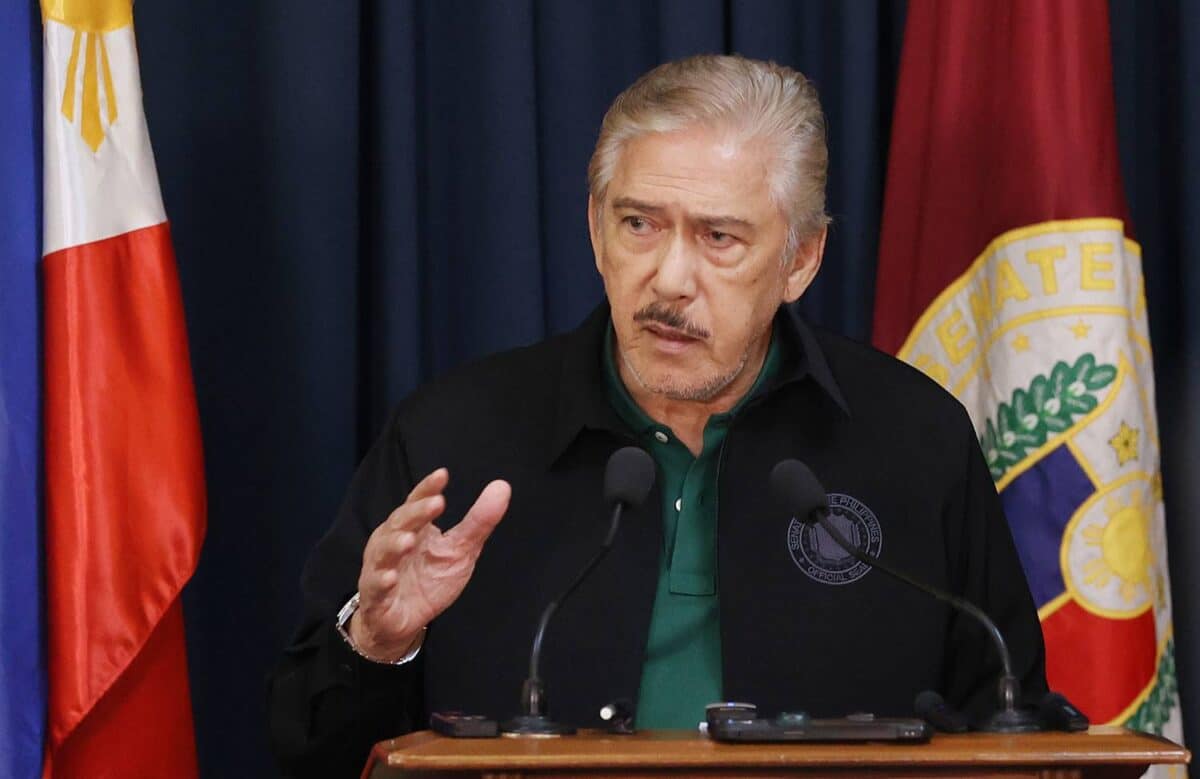
MANILA, Philippines — Senate President Vicente Sotto III said President Ferdinand Marcos Jr.’s decision to slash P92.5 billion in unprogrammed appropriations is part of the government’s effort to make the 2026 national budget “squeaky clean.”
The proposed 2026 General Appropriations Bill, approved and ratified by both chambers of Congress, contains P243 billion in unprogrammed appropriations.
“I know the 2026 budget is by far the cleanest ever, but it seems the president wants it squeaky clean. He even highlighted the Senate provision that prevents political patronage by politicians,” said Sotto when he was asked to comment on the vetoed unprogrammed funds.
READ: ‘Soft pork’ still a complaint as Marcos reviews 2026 budget
Unprogrammed allocations refer to budgetary items that can be used only when excess revenues or additional funding sources become available.
READ: Gatchalian says unprogrammed funds a ‘pork barrel’
Earlier, Sen. Sherwin Gatchalian, who heads the Senate finance panel, said unprogrammed funds in national budgets could be considered a form of pork barrel.
Gatchalian clarified that unlike programmed appropriations, which have definite funding sources and can be implemented immediately, unprogrammed appropriations have no fixed funding. They remain on standby and are released only when the national government collects excess revenues beyond targets or receives approved loans for foreign-assisted projects.
In the 2026 budget, there are 10 items under the unprogrammed allocation. These are as follows:
- Budgetary Support to GOCCs
- Prior Years’ LGU shares
- Payment of Personnel Services Requirements
- CARS Program
- RACE Program
- Insurance of Government Assets and Interests
- Government Counterpart for Certain Foreign-Assisted Projects
- Support to Foreign-Assisted Projects
- Program on Risk Management
- Revised AFP Modernization Program
Of these items, only three were not vetoed by the President – Support to Foreign Assisted Projects (P97.30 billion), Program on Risk Management (P3.6 billion), and Revised AFP Modernization Program (50 billion).
In a separate message to reporters on Monday, Senate President Pro Tempore Panfilo Lacson said he is happy and satisfied with the President’s decision to veto seven items in the unprogrammed funds for 2026.
“P150.9 is the exact amount that survived the veto, of which, P97.3 billion for government Counterpart for [Foreign Assisted Project], P3.6 billion for Program Risk Management, and P50 billion for AFP Modernization. All other 7 items under UA were vetoed,” said Lacson.
“Which is fine with me since the P35.3B could be a duplication of the [Government Optimization Program] counterpart fund of Foreign-Assited Projects,” he added.
Meanwhile, following the signing of the budget, Gatchalian emphasized that the P80 billion fund for Support to Augment Government Infrastructure Projects, otherwise known as SAGIP, has long been removed from the unprogrammed appropriations by the Senate.
“I respect the President’s constitutional authority to veto certain provisions of the 2026 national budget. I would like to highlight that the P80-billion SAGIP under the Unprogrammed Appropriations had already been removed by the Senate. The UA contains many components, and SAGIP has been identified as a source of abuse and corruption, particularly in flood control projects,” said Gatchalian.
“In other words, lump-sum funds for projects such as flood control were often parked under SAGIP, which the Senate had long eliminated. In 2024, flood control funds under SAGIP amounted to P86.93 billion,” he added.
He proceeded to underscore that “there was no direct veto under the Programmed Appropriations.”
“Moreover, five of the seven items vetoed under the UA were originally part of the National Expenditure Program (NEP), or the President’s Budget, which Congress merely acted on and refined,” he said.
Gatchalian also clarified that the inclusion of the RACE Program in the unprogrammed appropriations is for book-entry purposes only.
He pointed out that similar to the CARS Program, it is a non-cash item that merely provides the legal basis for the DTI–BOI to issue tax payment certificates.
“Moving forward, we will closely monitor and coordinate with the Executive Branch on the implementation of the budget,” said Gatchalian. /mcm /gsg


